Bulgarian Farmer Increased Cucumber Yield by 25.8%

A farmer in the village of Yunatsite, Bulgaria increased their cucumber crop yield by using Farmorganix, also known as SumaGrow. The trial was performed in greenhouses; total area was 1300 square meters. Farmorganix was used to treat the crop in 1000 square meters and the control was performed in the final 300 square meters.

“The plants in the treated-with-Farmorganix greenhouses were noticeably higher than the control: their height was 170-175cm, and in the untreated greenhouses their height was 150-155cm.’’

The leaf mass and fruit size from the treated greenhouses and control greenhouses are equal. The leaf color in the treated area was darker than the non-treated area. While the plants entered the fruiting stage at the same time, the treated area had a longer vegetation period of about 14 days.

“The yield of the area treated with SumaGrow was bigger in comparison with the untreated: 21 tons from the treated area of 1000 sq.m and 5 tons from the untreated area of 300 sq.m.” This resulted in a increase yield of 25.8%.
Cucumber — Bulgaria — Farmorganix

Vietnam Government/Farmer Co-op Perform Trial on Broccoli: 37.5% Yield Increase While Reducing Fertilizer 50%

With the advice and assistance of the National Fertilizer Testing Center and the Dat Viet Xanh Farmers’ Association, in collaboration with Gia Lam District, fertilizer trials were performed with EarthCare with SumaGrow Inside broccoli at Yen Vien Commune, Gia Lam District, Hanoi.

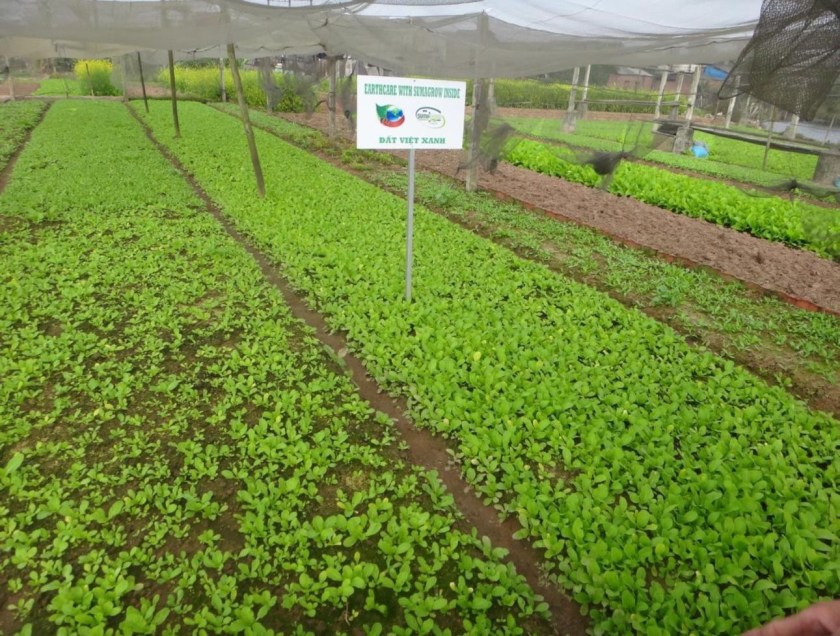
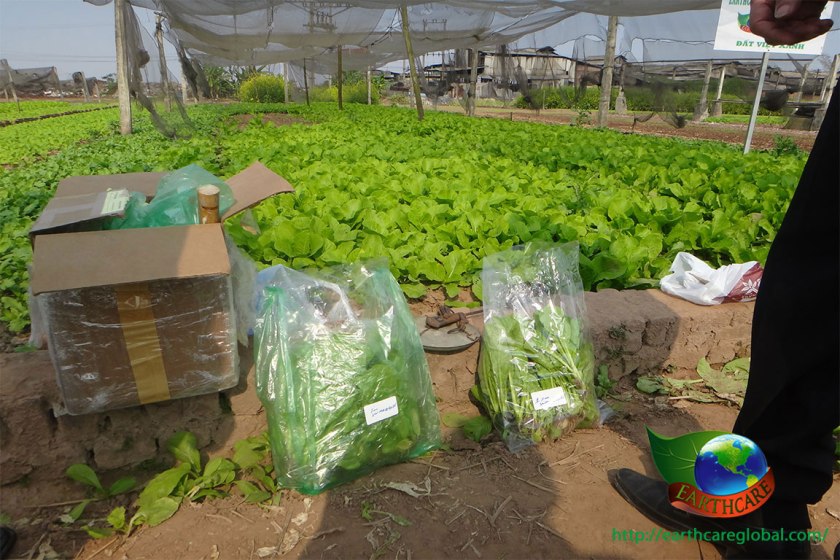
Vietnam Broccoli Trial rows

The plant height increased, fewer pests were noticed, soil organic matter increased 67.5%, and, of course, the yield increased 37.5% while the chemical fertilizer was reduced by 50%, which resulted in a net increase in profit of over $431/hectare (May 8, 2018 exchange rate).

38-percent-Yield-Increase-with-Earthcare-with-Sumagrow-inside-formula-for-Asian-Vegetable

The use of  EarthCare with SumaGrow inside reduced the urea nitrate residue in the broccoli.  This is an important criteria for evaluating the product as safe or not before being used.

This trial was supervised by Dr. Ngo Thi Dao, Former Head, Department of Soils University of Pedagogy in Hanoi, who is also the author of two books on agriculture.

The report also contains detailed soil analysis reports.

The original report is in Vietnamese, which was translated into English:  Vietnam Report in English — Broccoli

Vietnam Flower Trial: Roses with Longer Stems and Bigger Buds

This trial was conducted on one year old “lotus variety” roses and the SumaGreen (SumaGrow) treated plants grew longer plant flowering stems and had bigger buds — 11.5% larger in 90 days.

Anecdotally, it was noted that there was “more color” and the color was “bolder.”

The difference was not as large on the three year “velvet” rose bushes, likely because the trial only lasted 90 days.

Vietnam Rose Trial:  Báo cáo kh-o nghi-m SM hoa h-ng

English Translation:  Roses Translated Báo cáo kh-o nghi-m SM hoa h-ng

Mangoes in Ecuador Achieve Stellar Yield Increase of 42.7% to 51.5%

From the analysis carried out and the results obtained, it can be concluded that:  The best production result was seen in the T2 [SumaGrow plus a 50% reduction in fertilizer], which shows a double saving.  First, by increasing production by 51.5% and second by decreasing the use of chemical fertilizer by 50% • T3 (100% Genesis with SumaGrow) versus T1 (100% Chemical) shows an increase in production of 42.7% clearly showing the benefit of applying only (Genesis with SumaGrow) against traditional chemical fertilization.

T3 (100% Genesis with SumaGrow, no fertilizer) versus T1 (100% Chemical) shows an increase in production of 42.7% clearly showing the benefit of applying only (Genesis with SumaGrow) against traditional chemical fertilization.

Picture from Mango report

There was an amazing increase in the soil health as measured by the Organic Material:

Materia Orgánica del suelo %
INICIO FINAL
1,5 2,7

Here is the original report in Spanish (with pictures and graphs):

Ecuador — ITF RICABERTO (Mango)

A Google Translate version is available here without the pictures and graphs:

Ecuador — ITF RICABERTO (Mango) – English

Mississippi State University Trial Documents 13% Yield Increase in Soybeans While Reducing Fertilizer

From the report’s conclusion:  “Summa Grow (SumaGrow) at 1.0 gallons per acre did positively improve soybean performance (growth and yield) in low P2O5 and K2O soils despite having the recommended fertilizer rate reduced by 30%. This indicates that properly used, bio-stimulants can improve plant health and thereby improve yield. Even where no fertilizer was used, Summa Grow (SumaGrow) increased yield and performance of soybeans…”

This study is somewhat unique for a university study in that the study compared a product to both a Control and to a Grower Standard.  We have long maintained that the typical study (touted by many of our competitors) compares a product to a Control of nothing but soil.  This is NOT the real world.

Farmers want to know how a product will improve _their_ results in the real world.  This means comparing what they are presently doing, referred to as Grower Standard, to whatever is recommended using a new product, in this case SumaGrow.  While we believe the yield increase would have been higher than 13% if fertilizer had been reduced more than the 30% reduction used in this study, the 13% yield increase is a real world number which a farmer would have achieved since it compared what they are doing now to using SumaGrow with a reduction in fertilizer, which is recommended.  SumaGrow with zero fertilizer even out-yielded the Grower Standard.

For the record, when comparing the SumaGrow results to the Control, again, used by most of our competitors, the yield increase was 20% according to this study.

The full study can be accessed by clicking on this link:  Mississippi State University– Soybeans


China Wheat Trial During Drought

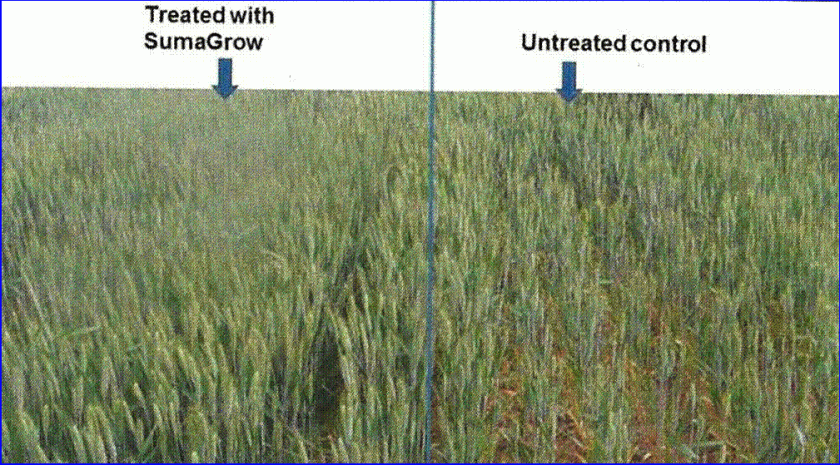
SumaGrow does very well during heat waves and drought conditions.  In this trial, the drought did not affect the yield on the SumaGrow plots, however, the control plot yield was very low.  It was a fair trial, however, the yield increase was so great that we are going to mention.  You will have to read the report your self to see the yield increase.

wheat grown in China during a drought SumaGrow treated versus grower standard -- yield differntial was 125%

Notice how you can see the soil in the control plots while the SumaGrow plots are so dense, you cannot see the soil.

The report can be found here:  China Wheat Results

Tea Field Results from China

The report (link below) was written by a government agency with assistance from Nanjing Forestry University.  The report did not specify an exact increase in yield, however, it stated, “all parameters related to plant growth vigor increased by more than 25% as compared with those of untreated tea trees” and SumaGrow “produces positive effect on the soil.”

The height, width, number of buds and size of buds all increased by at least 25%, leading us to conclude that the average yield increase was over 80% (see link to report below).

China Tea Leaves

The tea leaves (right) appeared shiny after treatment with SumaGrow.

Click here for the full report with additional pictures:

China Tea Report0001

Mississippi Muscadine Grapes Grow Better With SumaGrow

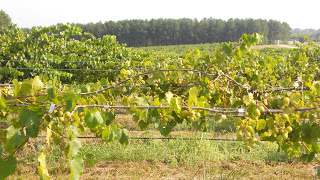
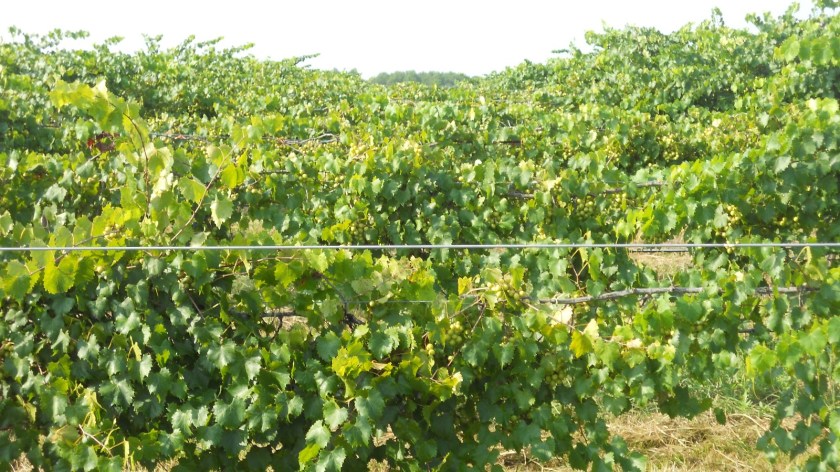
The following pictures were taken at Breckenridge Farms in Quitman, Mississippi.   You can see a noticeable difference in the development of the vines.  Where SumaGrow was used the vines of adjoining plants are full and meeting in the middle on the trellis.  The untreated vines lack fullness and are not even close to meeting in the middle.

Muscadine Grapes without SG Quitman MS Muscadine Grapes with SG Quitman MS

Last summer the treated vines produced over 4 tons per acre and untreated was only close to one ton per acre!

These grapes are juiced at a winery in North Carolina.  In the southeast U.S.,  they are mainly eaten fresh and used to make jelly and home-made wine.

The effect of SumaGrow on young varieties of muscadines has been proven to be significantly noticeable.  After using once on half of a selected field of young plants we had a increase in growth of up to 50% per plant.  SumaGrow has become part of our program to grow young plants faster. It not only enhances growth but also seems to improve the overall health of the plants.”
Elliott Phillips

This vineyard was written up in the news:  Breckenridge Vineyard News Article

Here is a link to one page summary:  Muscadines_Breckenridge_Mississippi_Testimonial

Pecan Trees Yield 25% More Nuts in South Africa

ExploGrow™ (SumaGrow) treated trees produced an estimated 5kg to 8kg extra per tree, compared with the untreated trees.  This increase equates to around 25% improvement in yield.  With N-P-K- fertilizers reduced to 50% of recommended quantities, the use of ExploGrow™ (SumaGrow) is essentially cost neutral.

The farmer, Mr. John Pozyn, achieved, by the use of ExploGrow™, an overall net gain of around R37,000 per hectare.

The size of the Pecan Nuts is also dramatically better. This places the product in the top category, resulting in the farmer being paid R11.50 more per kg, equal to a financial gain to the farmer per tree of around R290, adding up to R29,000 per hectare.

This increase equates to a 50% improvement in the sales price.

South Africa -- Pecan-Nut-trees-planted-with-ExploGrow-microbial-biofertiliser-doubled-growth-rate

Improved quality grading:

The size of the pecan nuts is also dramatically better.  This places the product in the top category, resulting in the farmer being paid R11.50 more per kg, equal to a financial gain to the farmer per tree of around R290, adding up to R29,000 per hectare.

This increase equates to a 50% improvement in sale price.

South Africa -- pecan tree transplant with bottle comparison

Improved growth rate:

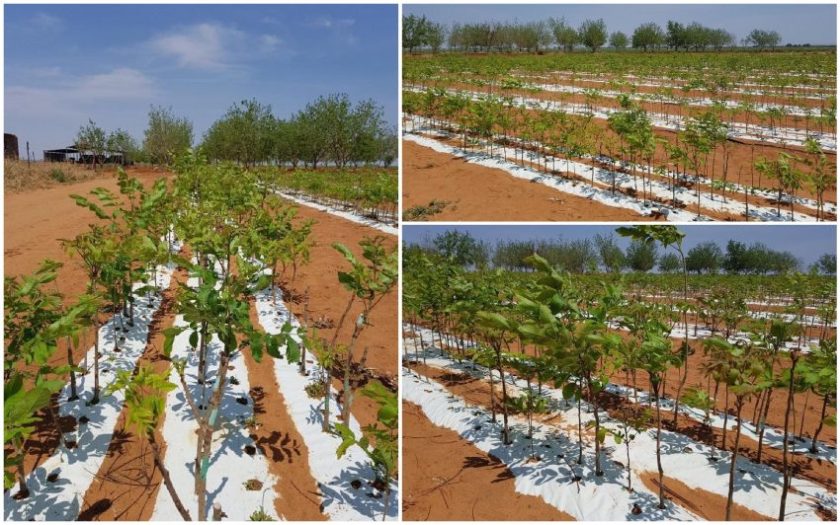
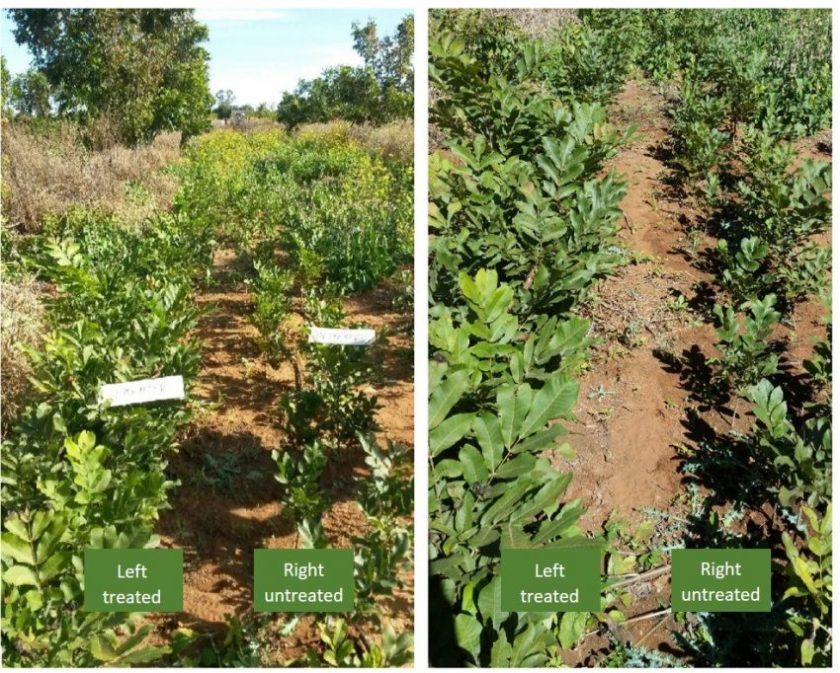
After 11 months, the ExploGrow™ (SumaGrow) treated trees already appear to be one year ahead in its growth cycle compared to the control.

My trees with ExploGrow (SumaGrow), after just 1 year, are just as high as two-year-old trees without ExploGrow (SumaGrow).

John Pozyn, Pecan nut tree farmer

The significance for farmers would be to achieve the 1 ton per hectare at least one year faster than the normal 5 years.

The significance for nurseries is that they would be able to sell trees to farmers after 3 years instead of 4 years.

By implication, a nursery producing 100,000 trees is likely to bank approximately R17,500,000 one year faster when using ExploGrow™ (SumaGrow).

The increased yield and price equates to a total increase of 75% value per hectare.

This result is without taking into account the faster growth rate.

South Africa -- pecan-nut-tree-nursery-using-explogrow-biofertiliserSouth Africa -- Pecan-Nut-Trees-control vs Treated

Organic Cucumbers in Italy Fertigation Grown Produce Much Healthier Plants

Solum Naturale, SumaGrow inside, test in Organic Agriculture. Cucumber test plot on tunnel with Fertigate system. Soil and foliar applications with excellent results in increased Brix level, more resistance to extreme temperature, larger and tastier fruits.

“Following the second application, done by foliar on the cucumbers, I noticed that the leaves were faded green, partially wilted on the control plot, and the fruits were still too small to be picked.  The plants treated with Solum Naturale (SumaGrow), looked very healthy with green leaves and each plant had three or more good sized cucumbers ready to be picked, this led to me to decide to apply the product in all my fields.”

Dr. Barbara Calgari, Agronomist, Azienda Agricola Calegari – Bagnarola di Budrio (BO) – Italy