Video to Promote the State of Mississippi

Bio Soil Enhancers, Inc., the manufacturer of SumaGrow products, has won several awards from the State of Mississippi for exporting, including the Governor’s Award for Excellence in Exporting, which is designed to recognize Mississippi companies for their success in maintaining or increasing export sales.

Due to Bio Soil’s exporting success, the company was asked to make a promotional video promoting the State of Mississippi:

Organic Cucumbers in Italy Fertigation Grown Produce Much Healthier Plants

Solum Naturale, SumaGrow inside, test in Organic Agriculture. Cucumber test plot on tunnel with Fertigate system. Soil and foliar applications with excellent results in increased Brix level, more resistance to extreme temperature, larger and tastier fruits.

“Following the second application, done by foliar on the cucumbers, I noticed that the leaves were faded green, partially wilted on the control plot, and the fruits were still too small to be picked.  The plants treated with Solum Naturale (SumaGrow), looked very healthy with green leaves and each plant had three or more good sized cucumbers ready to be picked, this led to me to decide to apply the product in all my fields.”

Dr. Barbara Calgari, Agronomist, Azienda Agricola Calegari – Bagnarola di Budrio (BO) – Italy

South Africa Organic Citrus Grower Improves Tree Survival Rate

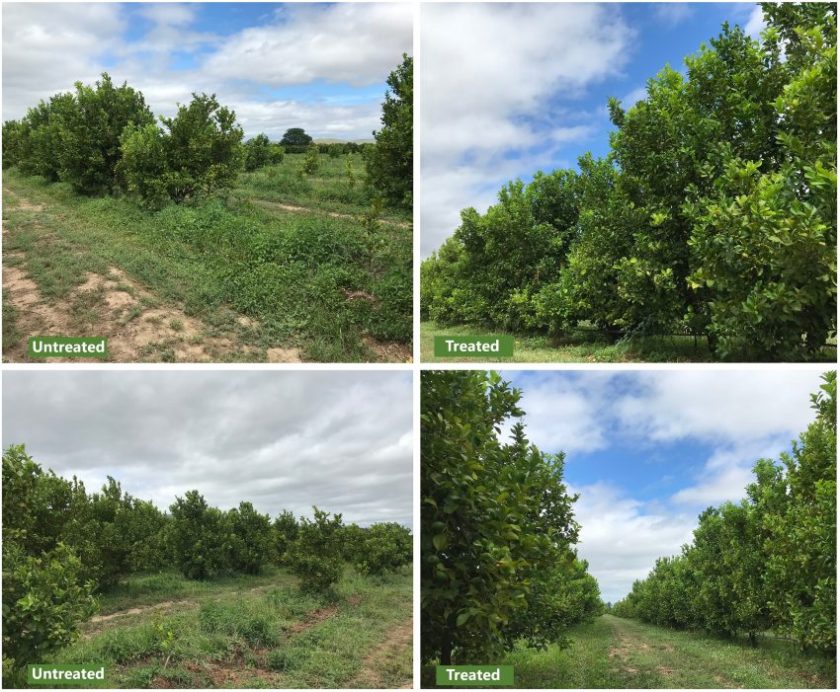
A South African organic citrus farmer improved his tree survival rate to almost 100% (up from 50%) after applying ExploGrow (SumaGrow), three years after replanting new organic citrus trees into “very old citrus soil”.

Due to organic growing restrictions on the use of chemical poisons/fertilizers, this farmer’s previous optimal survival rate was around 50%.  The citrus trees from the block treated with ExploGrow™ (SumaGrow) are also carrying many more lemons versus the control.

Organic-Citrus-Trees-South Africa Lemon

Photos above: 3 years after replanting Citrus trees, taken 10 days apart with slightly different lighting. Along with the improved survival rate, there is also a remarkable difference visible with naked eye. The farmer (based in the Sunday’s River Valley) invited us to bring any serious Citrus farmer to “come and see for themselves”.

South Africa Lemon tree comparison

The [ExploGrow (SumaGrow) treated] trees are growing aggressively, much faster than the control.” 🙂

Full Organic Citrus Farmer​

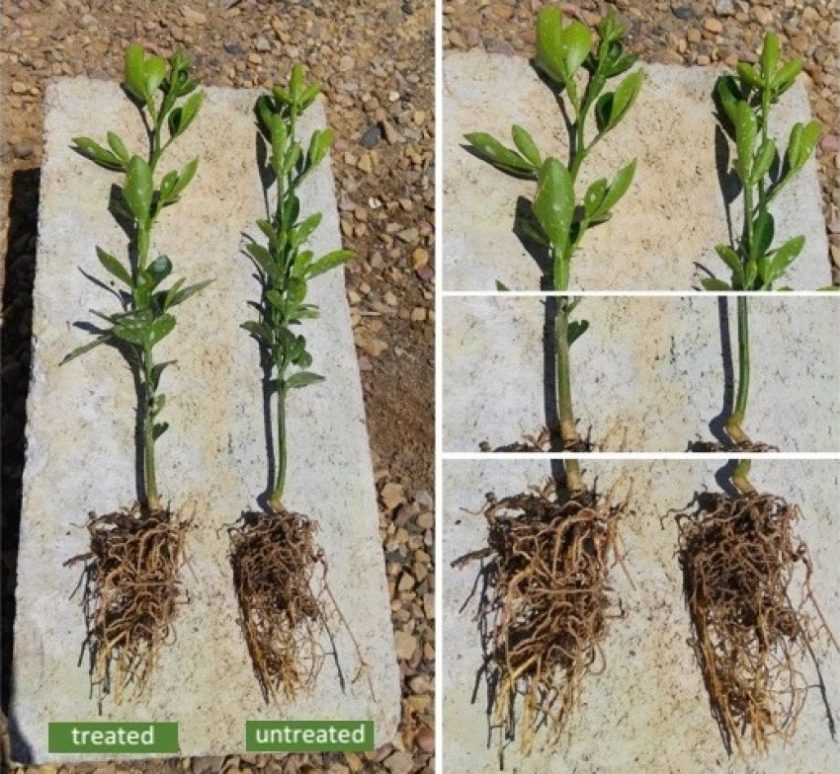
Below are pictures of seven month old orange tree seedlings treated with ExploGrow™  (SumaGrow).  The photos were taken nine weeks after the first application of ExploGrow™ (SumaGrow).

South Africa 7 week old orange seedlings

Stem diameter +22%ExploGrow™ (SumaGrow) treated 4.5mm, Untreated 3.7mm (9 weeks after the 1st application)

Increased root mass: over 100%  ExploGrow™ (SumaGrow) treated > 2,000mg; Untreated < 0,999mg

Improved growth rate: 19% Matured for replanting: ExploGrow™ (SumaGrow) treated: 19/100; Untreated: 16/100

South Africa Lucerne (Alfalfa) Achieves 130% Yield Increase

Lusern-Alfalfa-South Africa -- field comparison160126

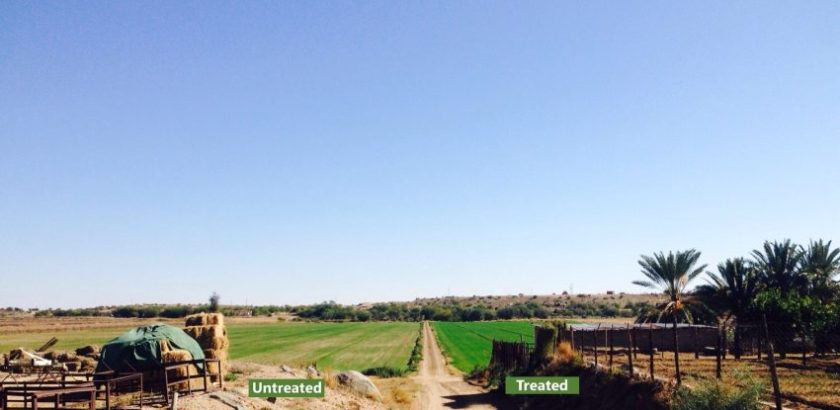
Mr. Francois van Rooyen, a lucerne and pecan nut agriculturist, carried out the following interesting controlled test on his lucerne.

  • The right-hand field was treated with ExploGrow™ (SumaGrow).
  • The left-hand field was not treated.
  • The soil is the same in both fields: very brackish and shallow water table, and is well drained with underground pipes.
  • In all other respects the two fields were treated the same, except a variation in the type of Lucerne.
    On the left hand field: Sardi 10 cultivar. On the right hand field WL 711.
  • Both fields were therefore top producers with low dormancy and both fields were also treated identically with organic acids, clay minerals, macro-elements, micro-elements and activated carbon, to provide an effective and balanced soil due to brackish conditions prevailing in the area.

ExploGrow™ (SumaGrow) has just raised the maximum yield ceiling for my land and a 130% increase in yield represents a massive increase in profits.”

Mr Francois van Rooyen, Lucerne and Pecan Nut agriculturist

UPDATE: Results after harvesting Lucerne

  • Harvesting took place during March/April 2016
  • Yield increase: 130%
  • The ExploGrow™ (SumaGrow) treated area produced 23 tons per hectare versus 10 tons per hectare from the untreated area.
  • Better plant health on the ExploGrow™ (SumaGrow) treated area showing a “remarkable difference compared to the untreated area”.
  • After a severe and damaging drought, I would attribute the radically superior yields on the treated land to the bigger root systems, reduction in watering requirements and improved plant health, delivering over 23 tons per hectare compared with only 10 tons per hectare for untreated area.” Mr. van Rooyen

Lucerne-Alfalfa -- South Africa close up

Based on his expertise in balancing soil, Mr van Rooyen offers his analysis as follows:

I believe that the carbon and organic acids act as excellent food for the ExploGrow™ (SumaGrow) microbes.

In nature, manure (for example) releases organic acids and then feeds organisms from the animal’s intestines that generates diverse populations of ground microbes. Without the dung, the microbial populations would not develop, because some form of energy needs to drive the microbial activity. It is not enough to only use a balanced vitamin and mineral supplement. You also need protein, carbohydrates and other energy-rich compounds to function at the optimal level.

I therefore believe that the organic acids in my fields provide the energy to the microbes to develop a diverse strong population. This diverse population can now execute various tasks like (a) extracting minerals from the soil solution and (b) helping the plant to absorb the minerals. 

Microbial activity fuels a high rate of multiplication. This impacts positively on the plants also acting as a precursor to the plant’s own productions of hormones, resulting in stronger growth, like I observed with ExploGrow™ (SumaGrow).

The ExploGrow™ (SumaGrow) microbes develop a diverse population in symbiosis with the plant. This diverse group of microbes carry out several critical functions such as binding of atmospheric nitrogen, releasing phosphates etc. In this specific case of brackish soil, the microbes make the excess iron available to the plant for consumption, which would otherwise be detrimental to root establishment and growth.

I believe this is clear from the photo, when looking at the left-hand field. One can clearly see in the photo that on the untreated left field the plant microbial interaction is poor, although this field has an otherwise absolutely balanced fertilization program.

The soil in the left field is simply poor in essential microbes.

Looking at the right-hand field treated with ExploGrow™ (SumaGrow), the picture speaks for itself!

On my farm I noticed an extraordinary difference in the presence of lice (“Bladspringers”). The ExploGrow™ (SumaGrow) treated areas were virtually unaffected compared with the untreated areas that were severely affected. Furthermore, three other farmers that I supplied with ExploGrow™ (SumaGrow) experienced similar results.

Mr Francois van Rooyen, Lucerne and Pecan Nut agriculturistLucerne - Alfalfa -- South Africa -- bush view

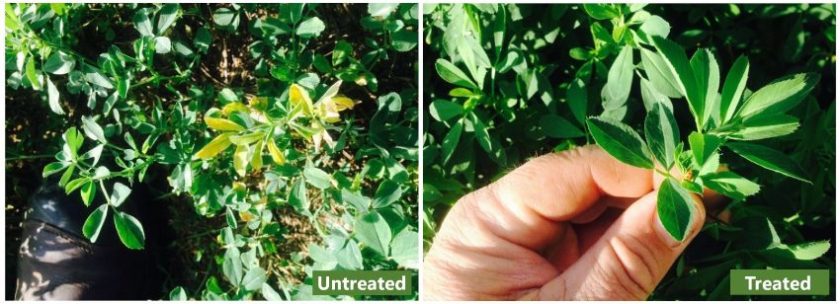
Photo: Note how many leaves there are on the treated plants compared to the low leaf count on the untreated plant

At the end of the season Mr van Rooyen shared the following observations:

  • A very intense drought hit the central and western regions in South Africa. 
  • Insects such as Bladspringer (Leafhopper) that normally survive in the field, fed on Lucerne for the whole summer, causing severe damage.
  • The ExploGrow™ (SumaGrow) treated area had a very positive effect on the resistance of the plants against insects.
  • Where farmers applied ExploGrow (SumaGrow) in the spring, there was visible resistance. The population of the insects were much smaller on the ExploGrow (SumaGrow) treated areas. Also, there were far less marks on the leaves in the ExploGrow (SumaGrow) treated areas.
  • Within six days of the end of March we had 150 mm of rain. 
  • The treated Lucerne survived much better in the wet conditions than the untreated Lucerne.
  • In the end, production varied from 10 tons for the untreated Lucerne and 23 tons for the treated Lucerne.”
 “ExploGrow™ (SumaGrow) is a winner!
Mr Francois van Rooyen, Lucerne and Pecan Nut agriculturist

Pecan Nuts

“I made the same observation on Pecan Nut trees, in an orchard where 40% of the trees were dying – although the soil was perfectly balanced with organic acids elements etc.  After treatment with ExploGrow™ (SumaGrow) there was a total recovery.”

Mr Francois van Rooyen, Lucerne and Pecan Nut agriculturist


South Africa Onion Trial Achieves a Return on Investment of 3959%

Return on investment: for every R1.00 invested in ExploGrow™ (SumaGrow), the farmer received a return of R39,59 (3,959%)

  • Hectares planted: 6
  • ExploGrow™ (SumaGrow) applied: 48 liters
  • Normal yield: 55 tons per hectare (5 year average)
  • ExploGrow™ (SumaGrow) yield: 104.2 tons per hectare
  • Additional tons per hectare: 49.8
  • Additional income per ton: R3,000.00
  • Additional tons harvested: 298.8 tons
  • Additional income over 6 hectares: R896,400.00
  • Return on investment: 3,959%

The estimated investment gain (return) is based on the farmer harvesting an extra 298.8 tons of onions by the use of ExploGrow™ (SumaGrow).  This translates in to an estimated financial gain of R 896,400.00 (US$ 68,953.84) = the sales value of the extra 298.8 tons of onions.

Interview with the farmer explaining his record onion harvest:

(The text below has been transcribed from the above video interview (in Afrikaans) with the farmer.)

“We used ExploGrow™ on our December* planting of onions.

*[extreme hot weather]

We applied 8 liters [2,11 US gal] per hectare [2,47 acres] of ExploGrow™ (SumaGrow).

We normally harvest an average of 55 tons per hectare on our December planting. Having just finished harvesting, the land [on the first preliminary calculation] yielded 95.6 tons** per hectare.

** [The final tonnage, however, added up to 104.2 tons per hectare. This was an +89.45% increase = +49.2 tons per hectare. This final tonnage was actually 8.6 tons more per hectare than the preliminary calculation mentioned in the video interview.]

The only change made to our normal onion program was that we added ExploGrow™ (SumaGrow), together with the recommended food products*** for ExploGrow™ (SumaGrow) microbes.

We applied the 8 liters / ha of ExploGrow™ (SumaGrow) twice at 4 liters per application [4 liters x 2], followed by 10 liters / ha of the recommended food products*** for the ExploGrow™ (SumaGrow) microbes.

We are very excited about the road ahead.
We immediately applied ExploGrow™ (SumaGrow) to all our potato crops! [Estimated around 100 hectares]
Now we are also very excited to see what ExploGrow™ (SumaGrow) will achieve with our potatoes.

Thank you very much, Rian.” 🙂

***[The ExploGrow™ (SumaGrow) food products” (co-applied to the soil) consist of low cost organic matter, carbon etc., generally recommended to assist some functions of the microbial species contained in the ExploGrow™ (SumaGrow) poly-microbial blend. These food products are recommended (although, not essential) when a soil analysis shows levels of high nitrate; low carbon and low organic matter.]


South Africa Potato Trial Increases Yield 79% and Brix Levels by 57%

In South Africa, and some nearby African countries, SumaGrow is marketed under the ExploGrow name.  Here is a video of a potato trial, which increased the yield by 79% and the brix (natural sugars and nutrients) levels by 57%!

Soil Health Shows Significant Improvement; A Sports Field Study in Costa Mesa, California

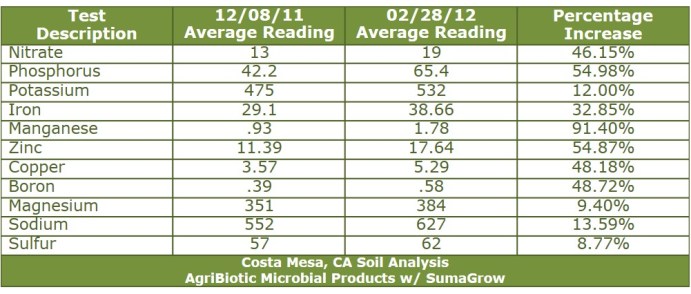
There are numerous benefits to using AgriBiotic Microbics with SumaGrow.  While most of our success stories focus on increasing yield and reducing or eliminating fertilizer, the before and after soil analyses (see link below) demonstrated significant improvements in the soil’s water efficiency and the nutrients measured in the soil increased from 8% to 91%.
 Costa Mesa BeforeCosta Mesa After

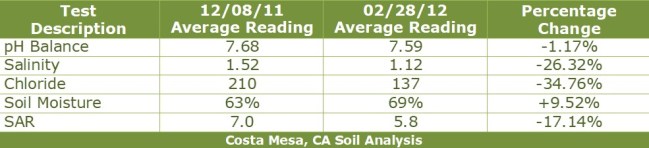
The soil samples are from the Jack R. Hammett Sports Complex, owned by the city of  Costa Mesa, California and were treated with AgriBiotic Microbics with SumaGrow.  Since the sports fields use recycled water, it makes high pH and chlorides a constant concern.  Despite these added issues, in less than three months, the pH in the treated fields went down slightly and the chloride and salinity levels dropped 26% and 34%, while the soil moisture (field capacity) increased from 63% to 69%.
Costa Mesa Salinity Chart

Soil salinity is the salt content in the soil.  Salt affected soils are caused by excess accumulation of salts from high salinity irrigation water.  As soil salinity increases, salt effects can result in degradation of soils and vegetation.  Accumulation of soluble salts (brine, salt and chloride may be used interchangeably for our purposes) is not normally a hazard to human health; however, it can cause adverse and long lasting environmental impacts to soil and ground water resources because chloride is highly soluble, does not adsorb onto soil particles, does not degrade, and generally inhibits biological processes.

Releases of salt onto the ground can damage soils by destroying the soil structure and permeability.  The presence of high concentrations of soluble salts can inhibit see germination and a plant’s ability to uptake water. Salt-contaminated soil in the near surface can lose its ability to support agricultural crops, native grasses, or other vegetation if salt levels are high enough, potentially contributing to surface erosion.

Chloride is the most recent addition to the list of essential elements and is essential for  many plant functions; however, too much chloride in plants results in symptoms that are similar to typical cases of salt damage. As shown in the attached reports from the city of Costa Mesa, the chloride target is <150 and AgriBiotic Microbics with SumaGrow brought the chloride from an average of 210, outside the target range, down to an average of 137, well within the target range.

Soil Moisture (or Field Capacity) is typically defined as the quantity of water or moisture contained in the soil 2–3 days after rain or irrigation.  AgriBiotic Microbics with SumaGrow increased the ability of these fields to hold water.

Sodium Adsorption Ratio (SAR) is a measure of the suitability of water for use in agricultural irrigation as determined by the concentrations of solids dissolved in the water.  Although SAR is only one factor in determining the suitability of water for irrigation, in general the higher the sodium adsorption ratio, the less suitable the water is for irrigation.  Irrigation using water with a high sodium adsorption ratio may require soil amendments to prevent long-term damage to the soil.  If irrigation water with a high SAR is applied to a soil for years, the sodium in the water can displace the calcium and magnesium in the soil.  This will cause a decrease in the ability of the soil to form stable aggregates and a loss of soil structure and tilth.  This will also lead to a decrease in infiltration and permeability of the soil to water leading to problems with crop production.

These laboratory reports clearly show the soil’s water efficiency being improved. There is more water in the soil as evidence by the higher soil moisture percentage, the water in the soil is more available to the plant life since the lower amount of salts in the soil allow more soil moisture to be used by the grass being grown and the SAR indicates the water in the soil is a higher quality water than before treatment started. The results were achieved without any significant rainfall.
Costa Mesa Nutrient Chart

The nutrient levels increased across the board with every element measured showing increases, some very significant.  This is especially significant when considering the short period of time between the soil tests and accepting that AgriBiotic Microbics with SumaGrow is primarily a microbial product which takes more time than fertilizer to show initial results.

The city of Costa Mesa, did continue its fertilization program (slow release 32-0-0) during the field trial, however, this would only have affected the increase in soil available nutrients for nitrates and even then, not to the degree shown. Further, other field trials using AgriBiotic Microbics with SumaGrow show even better results if fertilizer is reduced by at least 50% or eliminated altogether.

The microbial formulation of AgriBiotic Microbics with SumaGrow would have to be given the credit for the 48% to 91% increases in manganese, zinc, copper, boron and magnesium, all essential nutrients for optimal growth.

Download a three page summary:  Brix Agribiotics Summary

Independent Soil Analysis:



Texas Winter Wheat Trial Increased Net Profit 44.9%

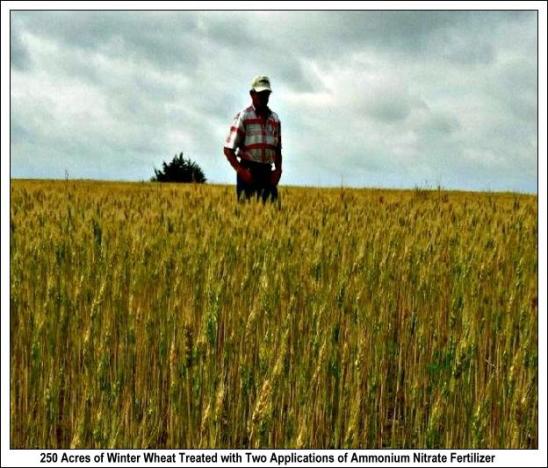
This comparison test was conducted on 500 acres of Fannin Ranch, north of Dallas, Texas.  The field was divided in two, 250 acre sections, and planted with Red Winter
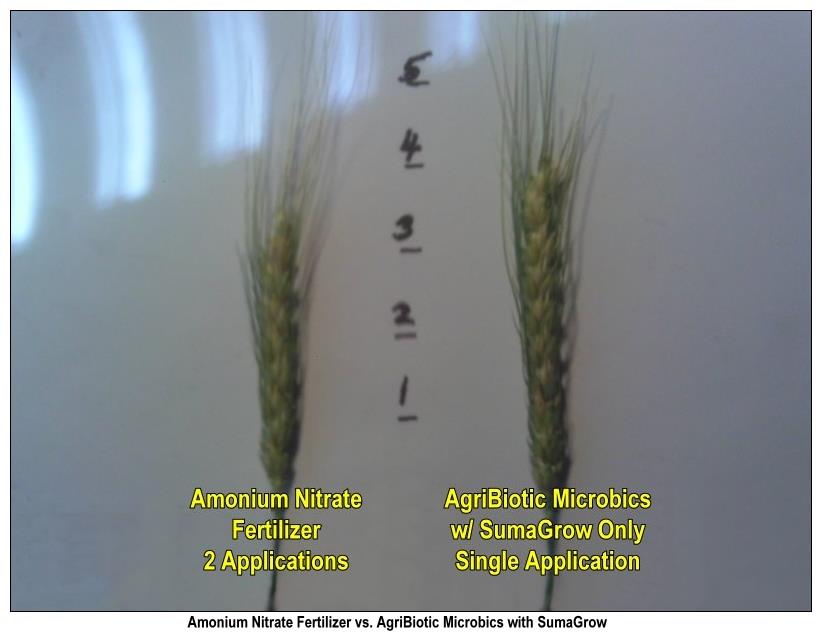
Wheat.  On one section, AgriBiotic Microbics with SumaGrow was applied shortly after planting in a single application.  The other section was treated with two applications of Ammonium Nitrate fertilizer.  The photos below were taken just before harvest in May.

Texas Winter Wheat treated with fertilizer

Texas Winter Wheat Treated with Brix Agribiotics

There is an obvious visual difference in the height and density of the two wheat fields. The grower reports that wheat heads on the SumaGrow wheat were significantly larger and yielded 36-40 seeds per head, compared to 30-34 seeds per head in the fertilized wheat.  Texas Wheat Trial Agribiotics Wheat Tillers

The results were overwhelmingly in favor of the AgriBiotic Microbic Products w/ SumaGrow.  Not only were input costs lower in treating the soil, but that section outperformed the other section by netting an average of 14 additional bushels per acre for a net profit increase of 44.9% per acre.

Click here for a two page summary with pictures:  Texas Wheat Trial — Brix Agribiotics

Mississippi State University Study Validates SumaGrow Benefits, 16% Yield Increase in Irish Potatoes

Irish potatoes are of great economic and dietary value as a food-source worldwide ranking as the third most important food crop after rice and wheat.  Potatoes require high levels of fertilizer to produce high yields with marketable quality. However, in some countries fertilizer is very difficult to obtain and very expensive. Using SumaGrow would greatly reduce this need for, and cost of, fertilizers.  With SumaGrow, it has been shown that equivalent yields and growth can be obtained at reduced fertilizer rates when compared to full recommended fertilizer treatments.

In almost all trials, SumaGrow actually increases the yield compared to the existing grower standard — what the farmer is obtaining now using the best available technologies without SumaGrow.  In this particular trial, growing Red LaSoda Irish potatoes, “combined yields from the grading process at ten days following harvest showed the same results where the SumaGrow treatments were as much as 2,509 Lbs/acre greater than the 100% fertilizer treatment without SumaGrow.”  This equates to a 16% yield increase.

Additionally, “at harvest criteria did show the strengths of the SumaGrow product in reducing fertilizer rates, hence reducing input costs and minimizing environmental hardships.”  Better plant health and vigor, as well as higher brix levels were also noted.

Here is the link to a copy of the study report: Mississippi State U — Irish Potato

China Cotton Study at Jiangxi Agricultural University Shows 28.3% Yield Increase

This university study doesn’t have many specifics, however, we do know the lint (what the farmer actually gets paid on) yield increase went up 28.3%.  Three gallons of SumaGrow were used per acre due to poor soil health.

The one page summary has some additional details: China_Cotton_Jiangxi_summary