UPDATE – Pecan Nut Trees in South Africa- 40% Increase in Yield in Nuts

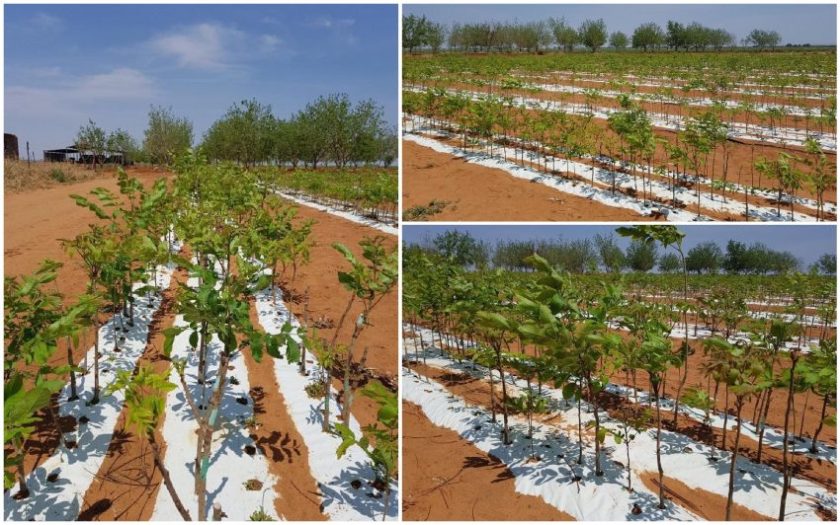
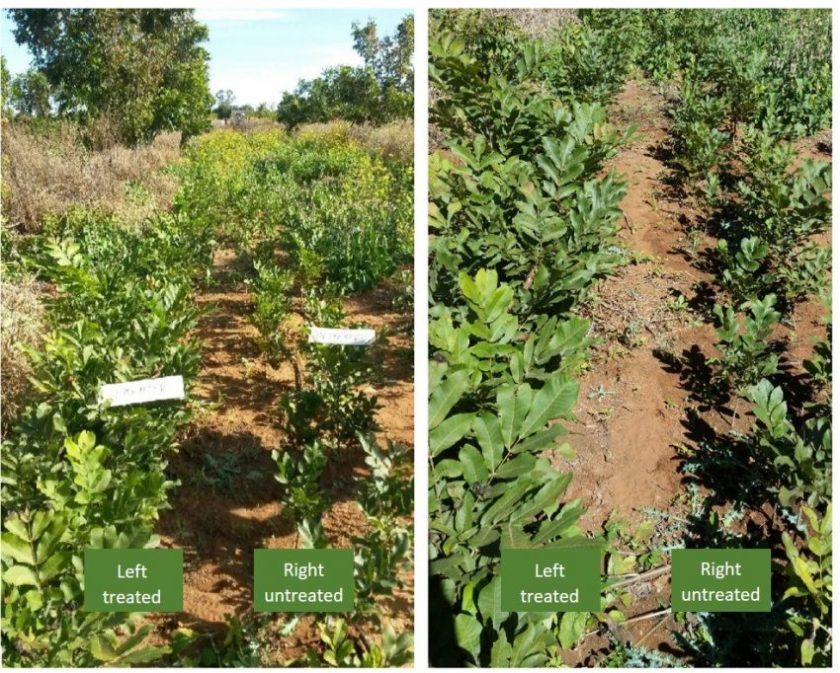
UPDATE - Pecan Nut Trees in South Africa- 40% Increase in Yield in Nuts pic 1Small trees in the nursery treated with Explogrow (SumaGrow) which were on the left, dramatically outperformed the untreated trees on the right.

SumaGrow trees produced an estimated 10kg extra per tree, compared with the untreated trees. This increase equates to an average of 25kg added production per tree, signifying a 40% improvement in mass.

The size of the Pecan nuts is also dramatically better. This places the product in the top category, resulting in the farmer being paid $0.85 more per kg, equal to a financial gain to the farmer per tree of around $21.

UPDATE - Pecan Nut Trees in South Africa- 40% Increase in Yield in Nuts pic 2Stem diameter of treated Pecan trees averages 1cm. Untreated Pecan trees stem diameter averages 0.6cm.

SumaGrow’s microbiologist is confident that similar results will be obtained with all the nut varieties grown in South Africa.

UPDATE - Pecan Nut Trees in South Africa- 40% Increase in Yield in Nuts pic 3

The competition for hectares between soybeans and groundnuts.

UPDATE - Pecan Nut Trees in South Africa- 40% Increase in Yield in Nuts pic 4Groundnut is a major oil-seed crop in South Africa. About 200,000 ha are planted annually, producing an average yield of 1,000 kg/ha. In South Africa, Groundnut yields are not only limited by low and late summer rains and poor soils, but also by many diseases including those caused directly or indirectly by plant-parasitic nematodes. Indirect damage may include increased secondary infection by fungi and reduced nodulation and nitrogen fixation. SumaGrow has shown to be effective in significantly alleviating the underscored factors.

81.1% Yield Increase for Vegetables in Kenya

The results indicated that application of SumaGrow produced a consistent positive effect on plant growth and yield on both crops at each site. Higher rates of SumaGrow had a pronounced effect on vegetative growth while better effects on harvestable yield were achieved at a lower product rate of 3.8L/acre. These results support the recommendation of SumaGrow for use as a biofertilizer on horticultural crops in Kenya.kenya

Tomatoes – the best effect of SumaGrow on plant height was achieved when the product was applied at the rate of 11.4 L/ha in combination with DAP at 100kg/ha at planting. This treatment has a mean plant height of 45.42cm in treated tomato plots at flowering state, compared to 28.17cm mean plant height in untreated control plots.

Significantly greater effects on yield were achieved in plots treated with SumaGrow in combination with DAP at planting. Application of SumaGrow during planting at the rate of 3.8 L/acre in combination with 100kg per acre of DAP produced the highest fruit yield per plant (4.31kg). This is in contrast to mean weights of 2.38kg per plant in the untreated control plots and 3.70kg per plant in the grower’s standard crop nutrition practice application of 200kg/acre DAP at planting. There was an 81.1% yield increase from the control plot to the SumaGrow treated plots.

Kenya — SUMAGROW TECHNICAL REPORT DRAFT

Myanmar Trial Result in 51.8% Yield Increase in Rice Crop

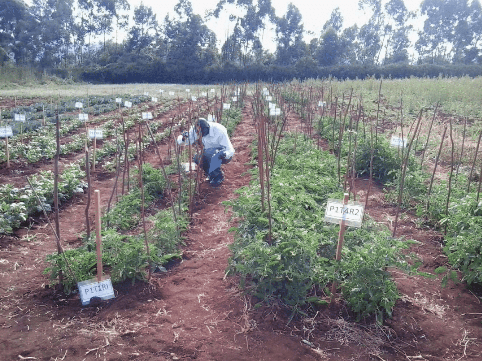
myanmarA trial was done on the effectiveness of SumaGrow on rice crops in Hlegu Township, Mynamar. Trial 1 was a control and Trial 2 was treated with a mixture of 1 gallon of SumaGrow (GrowPros) and 10 gallons of water. There was only one application of SumaGrow during the testing period.

myanmar 2

Data was collected twice; the first time was exactly one month after planting. “The test data from SumaGrow treated T2 field showed impressive results, higher plant heights and more multiple stems at just month trial period.” The data shows Trial 2 producing a greater plant height of 55.2cm compared the Trial 1 (control) which had a plant height of 43.3cm. The number of multiple stems also varied between trials, with Trial 1 having 11.6, while Trial 2 had 14.4.

myanmar 3

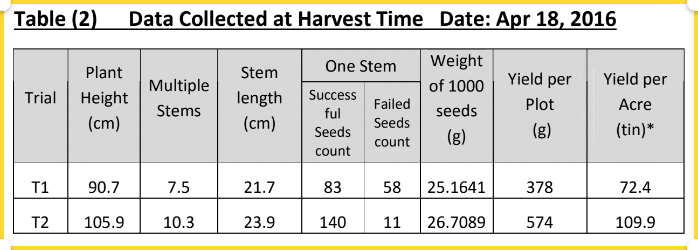
Data was collected again at harvest time. The table below shows that SumaGrow increased plant height, stem length, weight of seeds, yield per plot and yield per acre.

myanmar 4“It was apparent that applying Suma Grow with beneficial microbes to the field before planting was effective and helped grow stronger crops. “

“Comparing the results from the two trial fields T1 and T2 shows that the yield from SumaGrow treated field T2 is significantly better than non-SumaGrow treated Control field T1 in every important category of multiple stems, successful seeds, failed seeds, weight of 1000 seeds, and yields per acre. The test concludes that SumaGrow’ s produce is effectively beneficial to the health and crop productions.” The use of SumaGrow on the rice crops resulted in a 51.8% yield increase.

myanmar 5

Grow Pros Rice Trial Result Report Myanmar

Bulgarian Farmer Increased Cucumber Yield by 25.8%

A farmer in the village of Yunatsite, Bulgaria increased their cucumber crop yield by using Farmorganix, also known as SumaGrow. The trial was performed in greenhouses; total area was 1300 square meters. Farmorganix was used to treat the crop in 1000 square meters and the control was performed in the final 300 square meters.

“The plants in the treated-with-Farmorganix greenhouses were noticeably higher than the control: their height was 170-175cm, and in the untreated greenhouses their height was 150-155cm.’’

The leaf mass and fruit size from the treated greenhouses and control greenhouses are equal. The leaf color in the treated area was darker than the non-treated area. While the plants entered the fruiting stage at the same time, the treated area had a longer vegetation period of about 14 days.

“The yield of the area treated with SumaGrow was bigger in comparison with the untreated: 21 tons from the treated area of 1000 sq.m and 5 tons from the untreated area of 300 sq.m.” This resulted in a increase yield of 25.8%.

Cucumber — Bulgaria — Farmorganix

SEEDSTOCK Article: Too Good to be True?

Seedstock

Too Good to be True? Not so, says Founder of Yield Boosting, Fertilizer Reducing Soil Enhancement Product

July 5, 2012 |

Lou Elwell makes some mighty big claims about Bio Soil Enhancers, Inc.’s SumaGrow, a sustainable and organic microbial formula designed to enrich and rehabilitate soil. He will readily tell you that SumaGrow’s 10 microbes work together to increase crop yields, significantly reduce the need for chemical fertilizers, and improve the water retention of the soil. He started singing that tune in 2009, but says he ran into skepticism. “It became obvious that our story sounded too good to be true,” Elwell says, adding many customers suggested that he might as well be selling snake oil at the county fair. So, in 2010, he started looking for third-party confirmation to lend some validity to his claims.

Since, Elwell says that he has had SumaGrow field tested in 20 states and examined by five different universities. One study conducted by the department of molecular biology and microbiology at the University of Michigan confirmed that application of SumaGrow reduced the need for both pesticides and fertilizers, while enhancing crop productivity and improving soil health. The SumaGrow website points to field trials all over the country detailing promising yields for a variety of crops including, alfalfa, corn, cotton, forage/hay crops, lawn/garden, soybeans, and vegetables.

Creating SumaGrow

Elwell says that he has been cultivating microbes for 20 years, first under the name Bio Solutions Franchise Corp. Bio Solutions remediated waste from restaurant grease traps, boasting 42 service locations at its height, ranging from fast food restaurants to some of the swankiest restaurants in the country. When Hurricane Katrina hit, it took the factory’s roof with it. By the time the factory was operational again, Bio Solutions had lost several customers. Those lost accounts lost combined with accounts they had lost while pushing clients to move from remediation to recycling forced Elwell and Wade to rethink their company. Elwell says that Bio Solutions is still around serving those customers that stuck with him through the rough times, though he no longer actively promotes the original business. All his energy and investment lies in Bio Soil Enhancers, Inc and the cultivation of microbes for agricultural purposes.

Bio Soil Enhancers, Inc. is a research and development company and manufacturer, which licenses the SumaGrow formula to independent distributors across the country and the world. In the early years, Elwell says that he and his business partner Wayne Wade funded the venture entirely. Since, they have brought in strategic investors that are active collaborators in the company.

Elwell said that one reason for creating a business around soil enhancement was that the science had already been established indicating that live microbes play a key role in soil performance. Intentionally making these microbes work for the farmer in an accessible and profitable way, however, was another story. “Getting those microbes from the petri dish to the greenhouse is an achievement, but getting them from the greenhouse to the field is a herculean achievement.

Microbes are live, albeit simple, animals. Some strains are compatible with one another and others are not, Elwell explains. The scientists working in his factory and labs have experience cultivating large-scale microbe populations and learning to deal with the intricacies of microbe interactions, he says. The result is a formula rich with 10 different microbes that live together and perform multiple functions. Elwell says that while there are competitors that offer microbial soil enhancers, most of them rely on a single microbe.

Putting Microbes to Work

According the SumaGrow website, much of what the microbes found in SumaGrow do is convert resources naturally found in the soil into a form that can be used by plants. A certain percentage of nitrogen, phosphorous, and minerals such magnesium and calcium can lie locked in the soil and Elwell says SumaGrow can change that. Beyond that, the website boasts that SumaGrow can help to maintain an optimum ph, even under extreme environmental conditions.

If SumaGrow does half of what it claims to do, it could have tremendous potential for sustainable farming. Because fertilizers kill microbes, Elwell recommends that farmers cut back their fertilizers by at least 50% when applying SumaGrow, adding that the plants should perform better than they did with the full fertilizer regimen. Currently, a portion of the fertilizer that is applied to most crops leaches phosphorous and nitrogen, two key culprits in the formation of dead zones in bays, gulfs and lakes.

Elwell says that the roots of plants grown with SumaGrow are bigger, deeper, and broader than conventional roots. Bigger roots not only support more productive plants, but they better equip plants to deal with fluctuations in rainfall. Roots that reach deeper take longer to dry out as soil tends to dry out from the surface down. They are also better at finding their own water sources than shallow roots.

Additionally, Elwell says that the microbes in SumaGrow can gather sandy soil into clumps that are better able to retain water while also breaking down clay that might get water logged and contribute to root rot or fungal growth. By altering the absorbency of the soil, Elwell believes that SumaGrow can both enhance drought tolerance and help to reduce runoff.

It is not hard to see why SumaGrow has been compared to snake oil. The list of purported benefits to the plant, farmer, and environment goes on and on. Elwell recognizes this and continues to commission studies and trials to support the product.

Testimony from the Field

Jodie Cammack, a former USDA employee, who worked on field trials for organic rice was so impressed by the results of SumaGrow that when the USDA announced that his office was moving, he opted to stay in Beaumont, Texas and sell SumaGrow himself. In a telephone interview, he talked about the first time he tried out a gallon of SumaGrow on his rice crops. “At the end of the season I started to calculate these [crop] weights and was just amazed at what I saw.” He added that when he first saw the numbers he went back and reweighed everything himself to make sure there had not been any error.

In 2011, the press started to notice a growing crowd of cheerleaders like Cammack were throwing their support behind SumaGrow. By year’s end, Popular Science had named Bio Soil Enhancers a grand award winner in the Best of What’s New for 2011 and the company had turned its first profit.

Internet Source:  Seedstock Article

Mississippi Muscadine Grapes Grow Better With SumaGrow

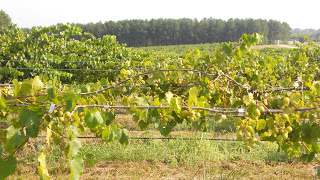
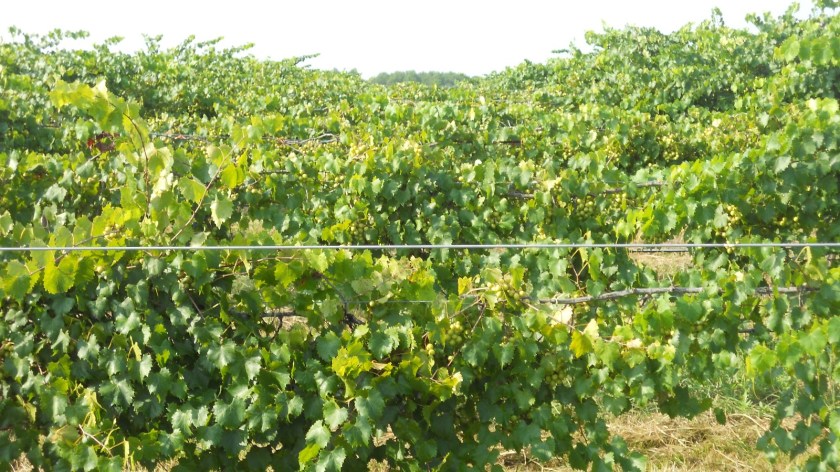
The following pictures were taken at Breckenridge Farms in Quitman, Mississippi.   You can see a noticeable difference in the development of the vines.  Where SumaGrow was used the vines of adjoining plants are full and meeting in the middle on the trellis.  The untreated vines lack fullness and are not even close to meeting in the middle.

Muscadine Grapes without SG Quitman MS Muscadine Grapes with SG Quitman MS

Last summer the treated vines produced over 4 tons per acre and untreated was only close to one ton per acre!

These grapes are juiced at a winery in North Carolina.  In the southeast U.S.,  they are mainly eaten fresh and used to make jelly and home-made wine.

The effect of SumaGrow on young varieties of muscadines has been proven to be significantly noticeable.  After using once on half of a selected field of young plants we had a increase in growth of up to 50% per plant.  SumaGrow has become part of our program to grow young plants faster. It not only enhances growth but also seems to improve the overall health of the plants.”
Elliott Phillips

This vineyard was written up in the news:  Breckenridge Vineyard News Article

Here is a link to one page summary:  Muscadines_Breckenridge_Mississippi_Testimonial

Pecan Trees Yield 25% More Nuts in South Africa

ExploGrow™ (SumaGrow) treated trees produced an estimated 5kg to 8kg extra per tree, compared with the untreated trees.  This increase equates to around 25% improvement in yield.  With N-P-K- fertilizers reduced to 50% of recommended quantities, the use of ExploGrow™ (SumaGrow) is essentially cost neutral.

The farmer, Mr. John Pozyn, achieved, by the use of ExploGrow™, an overall net gain of around R37,000 per hectare.

The size of the Pecan Nuts is also dramatically better. This places the product in the top category, resulting in the farmer being paid R11.50 more per kg, equal to a financial gain to the farmer per tree of around R290, adding up to R29,000 per hectare.

This increase equates to a 50% improvement in the sales price.

South Africa -- Pecan-Nut-trees-planted-with-ExploGrow-microbial-biofertiliser-doubled-growth-rate

Improved quality grading:

The size of the pecan nuts is also dramatically better.  This places the product in the top category, resulting in the farmer being paid R11.50 more per kg, equal to a financial gain to the farmer per tree of around R290, adding up to R29,000 per hectare.

This increase equates to a 50% improvement in sale price.

South Africa -- pecan tree transplant with bottle comparison

Improved growth rate:

After 11 months, the ExploGrow™ (SumaGrow) treated trees already appear to be one year ahead in its growth cycle compared to the control.

My trees with ExploGrow (SumaGrow), after just 1 year, are just as high as two-year-old trees without ExploGrow (SumaGrow).

John Pozyn, Pecan nut tree farmer

The significance for farmers would be to achieve the 1 ton per hectare at least one year faster than the normal 5 years.

The significance for nurseries is that they would be able to sell trees to farmers after 3 years instead of 4 years.

By implication, a nursery producing 100,000 trees is likely to bank approximately R17,500,000 one year faster when using ExploGrow™ (SumaGrow).

The increased yield and price equates to a total increase of 75% value per hectare.

This result is without taking into account the faster growth rate.

South Africa -- pecan-nut-tree-nursery-using-explogrow-biofertiliserSouth Africa -- Pecan-Nut-Trees-control vs Treated

South Africa Lucerne (Alfalfa) Achieves 130% Yield Increase

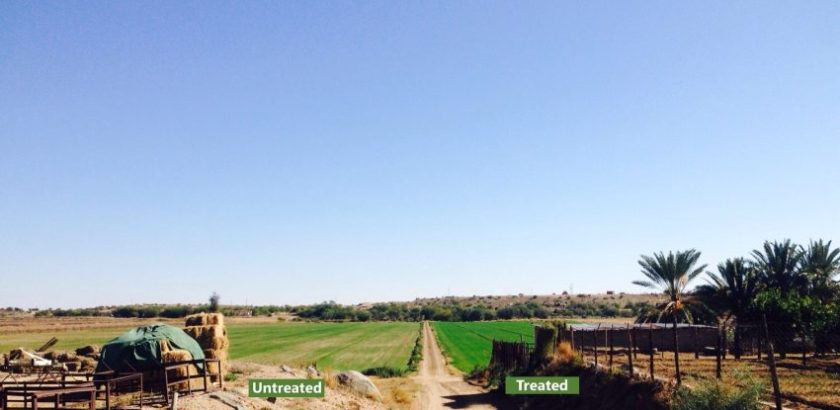
Lusern-Alfalfa-South Africa -- field comparison160126

Mr. Francois van Rooyen, a lucerne and pecan nut agriculturist, carried out the following interesting controlled test on his lucerne.

  • The right-hand field was treated with ExploGrow™ (SumaGrow).
  • The left-hand field was not treated.
  • The soil is the same in both fields: very brackish and shallow water table, and is well drained with underground pipes.
  • In all other respects the two fields were treated the same, except a variation in the type of Lucerne.
    On the left hand field: Sardi 10 cultivar. On the right hand field WL 711.
  • Both fields were therefore top producers with low dormancy and both fields were also treated identically with organic acids, clay minerals, macro-elements, micro-elements and activated carbon, to provide an effective and balanced soil due to brackish conditions prevailing in the area.

ExploGrow™ (SumaGrow) has just raised the maximum yield ceiling for my land and a 130% increase in yield represents a massive increase in profits.”

Mr Francois van Rooyen, Lucerne and Pecan Nut agriculturist

UPDATE: Results after harvesting Lucerne

  • Harvesting took place during March/April 2016
  • Yield increase: 130%
  • The ExploGrow™ (SumaGrow) treated area produced 23 tons per hectare versus 10 tons per hectare from the untreated area.
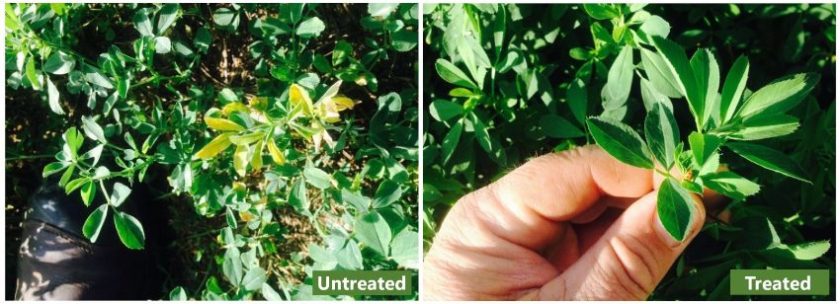
  • Better plant health on the ExploGrow™ (SumaGrow) treated area showing a “remarkable difference compared to the untreated area”.
  • After a severe and damaging drought, I would attribute the radically superior yields on the treated land to the bigger root systems, reduction in watering requirements and improved plant health, delivering over 23 tons per hectare compared with only 10 tons per hectare for untreated area.” Mr. van Rooyen

Lucerne-Alfalfa -- South Africa close up

Based on his expertise in balancing soil, Mr van Rooyen offers his analysis as follows:

I believe that the carbon and organic acids act as excellent food for the ExploGrow™ (SumaGrow) microbes.

In nature, manure (for example) releases organic acids and then feeds organisms from the animal’s intestines that generates diverse populations of ground microbes. Without the dung, the microbial populations would not develop, because some form of energy needs to drive the microbial activity. It is not enough to only use a balanced vitamin and mineral supplement. You also need protein, carbohydrates and other energy-rich compounds to function at the optimal level.

I therefore believe that the organic acids in my fields provide the energy to the microbes to develop a diverse strong population. This diverse population can now execute various tasks like (a) extracting minerals from the soil solution and (b) helping the plant to absorb the minerals. 

Microbial activity fuels a high rate of multiplication. This impacts positively on the plants also acting as a precursor to the plant’s own productions of hormones, resulting in stronger growth, like I observed with ExploGrow™ (SumaGrow).

The ExploGrow™ (SumaGrow) microbes develop a diverse population in symbiosis with the plant. This diverse group of microbes carry out several critical functions such as binding of atmospheric nitrogen, releasing phosphates etc. In this specific case of brackish soil, the microbes make the excess iron available to the plant for consumption, which would otherwise be detrimental to root establishment and growth.

I believe this is clear from the photo, when looking at the left-hand field. One can clearly see in the photo that on the untreated left field the plant microbial interaction is poor, although this field has an otherwise absolutely balanced fertilization program.

The soil in the left field is simply poor in essential microbes.

Looking at the right-hand field treated with ExploGrow™ (SumaGrow), the picture speaks for itself!

On my farm I noticed an extraordinary difference in the presence of lice (“Bladspringers”). The ExploGrow™ (SumaGrow) treated areas were virtually unaffected compared with the untreated areas that were severely affected. Furthermore, three other farmers that I supplied with ExploGrow™ (SumaGrow) experienced similar results.

Mr Francois van Rooyen, Lucerne and Pecan Nut agriculturistLucerne - Alfalfa -- South Africa -- bush view

Photo: Note how many leaves there are on the treated plants compared to the low leaf count on the untreated plant

At the end of the season Mr van Rooyen shared the following observations:

  • A very intense drought hit the central and western regions in South Africa. 
  • Insects such as Bladspringer (Leafhopper) that normally survive in the field, fed on Lucerne for the whole summer, causing severe damage.
  • The ExploGrow™ (SumaGrow) treated area had a very positive effect on the resistance of the plants against insects.
  • Where farmers applied ExploGrow (SumaGrow) in the spring, there was visible resistance. The population of the insects were much smaller on the ExploGrow (SumaGrow) treated areas. Also, there were far less marks on the leaves in the ExploGrow (SumaGrow) treated areas.
  • Within six days of the end of March we had 150 mm of rain. 
  • The treated Lucerne survived much better in the wet conditions than the untreated Lucerne.
  • In the end, production varied from 10 tons for the untreated Lucerne and 23 tons for the treated Lucerne.”
 “ExploGrow™ (SumaGrow) is a winner!
Mr Francois van Rooyen, Lucerne and Pecan Nut agriculturist

Pecan Nuts

“I made the same observation on Pecan Nut trees, in an orchard where 40% of the trees were dying – although the soil was perfectly balanced with organic acids elements etc.  After treatment with ExploGrow™ (SumaGrow) there was a total recovery.”

Mr Francois van Rooyen, Lucerne and Pecan Nut agriculturist


Georgia Cotton — Sayer Farms Increases Lint Yield by 27.7%

This trial was conducted on Sayer Farms, in Irwin County, Georgia on two dry land test plots after 2.5 weeks with no rain.  The soil type was the same for both plots which are across a dirt road from each other.

The SumaGrow treated plot showed a 27.7% increase in lint yield and a 27.6% increase in seed production.  Nitrogen fertilizer was also reduced by 58.8%.

Plot A) GENESIS with Sumagrowtest plot                          7.55 acres

Applied ½ gal.SumaGrow per acre along with reflex after planting

Applied ½ gal. SumaGrow per acre 5 weeks later over top spray (1.0 gallon total per acre)

Applied 20 gal. nitrogen per acre at layby and 15 gal.nitrogen per acre after planting (total 35gal)

Applied 2 tons chicken litter and 150 lbs per acre of potash (preplant) per acre.

Total Lint : 9952 lbs.                                                    Total Seed:  11,443 lbs

Divided by 7.55 acres                                                      Divided by 7.55 acres

1318 lbs per acre                                                             1515 lbs per acre

*    *          *    *    *          *    *             *

Plot B) STANDARD (Untreated) test plot                               15.76 acres

Applied 85 lbs total nitrogen per acre

Applied 2 tons chicken litter per acre and 150 lbs potash per acre

Total Lint: 16279 lbs                                                   Total Seed: 18719 lbs

Divided by 15.76 acres                                                  Divided by 15.76  acres

1032 lbs per acre                                                            1187 lbs per acre

******************************************************************************

Net Production and Profit Comparison

Lint: Genesis with SumaGrow gain

1318 lbs – 1032 lbs = 286 lbs per acre x .84 per lb.(1/02/14)                        =$240.24

Seed: Genesis with SumaGrow gain 

1515 lbs – 1187 lbs =328 lbs per acre x 10.5 cents                                      =    34.44

Nitrogen: Reduction with Genesis with SumaGrow                             =    60.00 

Total Dollar GAINS from Genesis with SumaGrow per acre               $334.68


Sayer Cotton 2013

Mississippi Raised Bed Gardener Raves About SumaGrow

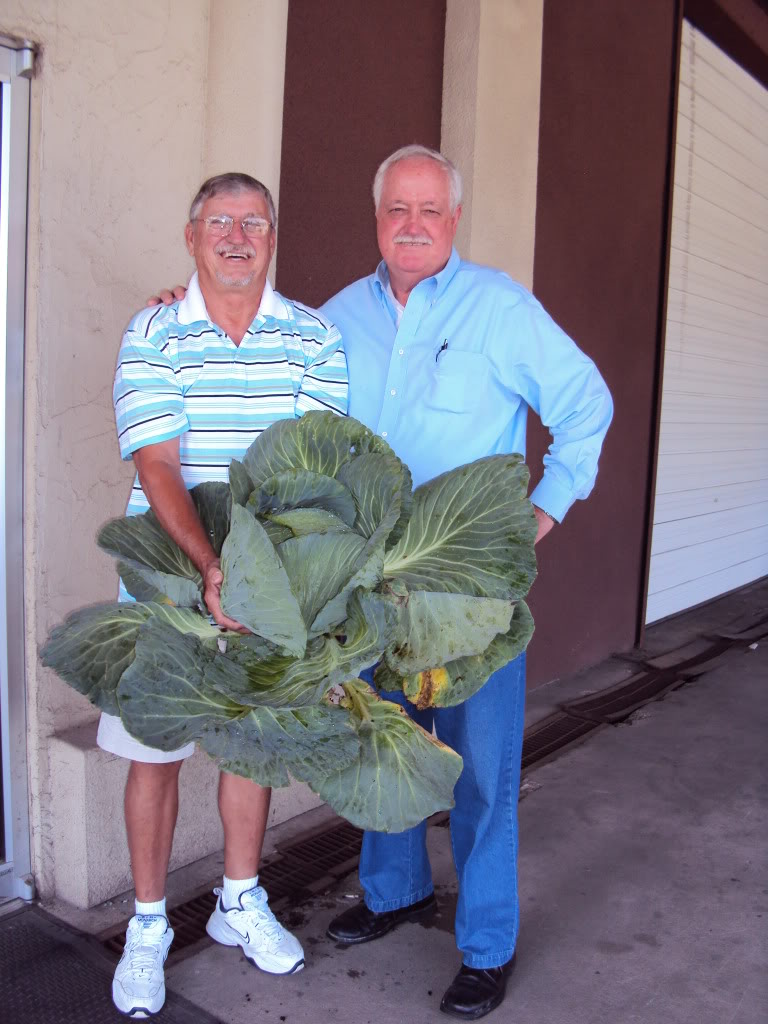
Arthur Herrin, resident of Petal, Mississippi, heard about Bio Soil from a news story which aired on WDAM (a local NBC affiliate).  When he planted his garden, he decided to treat it with only [SumaGrow]. This is what he had to say:

“After seeing a news article on TV about your product, I decided to give it a try. I have a raised bed vegetable garden in the back yard of my home. I’ve gardened this way for the last several years. It has always been a successful way to garden, but I have never had such dramatic results as I have seen since using [SumaGrow] only one time!

The plants are greener, healthier, and stronger than they have ever been. They are larger, and each plant is loaded with fruit.

I was very skeptical about the product in the beginning, but I believe it will be a very beneficial tool in gardening vegetables and flowers. All my plants have grown so green and so sturdy that I cannot wait to see the harvest. [SumaGrow] has made a believer out of me.

I have not used any commercial fertilizer at all and still have these great results using your completely organic product.”

Herrin and Wayne with cabbage

Arthur Herrin, with one of the huge cabbages he grew, and Wayne Wade, company President.