SumaGrow Peer Reviewed Journal Article

This article was written by Dr. Lalithakumari Janarthanam who served for six years as our Director of Research & Development (now retired).  In the U.S., we are not allowed to make any biopesticidal claims, so the article title and abstract are copied here with a link to the article below, without comment:

Bioprotectant with multifunctional microorganisms: A new dimension in plant protection

ABSTRACT In the present investigations it is proved that the inoculation of multifunctional microbial formulation to the soil improves soil quality, soil health, plant health, growth, yield, and quality of a broad spectrum of crops reducing chemical fertilizer and pesticide input. These microbial populations consist of selected species including plant growth promoting rhizo-bacteria, N2-fixing bacteria, Phosphate solubilizers, phytohormone producers, plant disease suppressive bacteria and fungi. To make it very simple a different dimension as „Bio Protectant” is given in this presentation to the collective synergistic effects of beneficial microbes stimulating soil, plant and environmental health reducing chemical fertilizer and pesticide application. A healthy plant does not require unwanted, poisonous chemical pesticides. Review of literature is focused in multiple ways on the growth promoting ability along with the biological activity of beneficial microorganisms. The present SumaGrow-F2 formulation contains multi-functional Rhizobium species, Pseudomonas spp., Bacillus, and Trichoderma spp. The recorded novel benefits of SumaGrow-F2 formulation in the Green House and Field are discussed here as microbes increasing plant health, soil health, and root health of a broad spectrum of crops. Not only can it eliminate almost all insect infestations and reduce fungal or bacterial infection, it also creates a healthier environment for plant growth. The result is healthy crops with a corresponding increase in the yield of fruits or vegetables or grains. Modern trend is to look for inspiring intelligent multi-functional microbial Plant protectant or bio protectant for sustainable agriculture.

Here is the article:

Bioprotectant with multifunctional microorganisms – A new dimension in plant protection JBiopest
Mississippi Muscadine Grapes Grow Better With SumaGrow

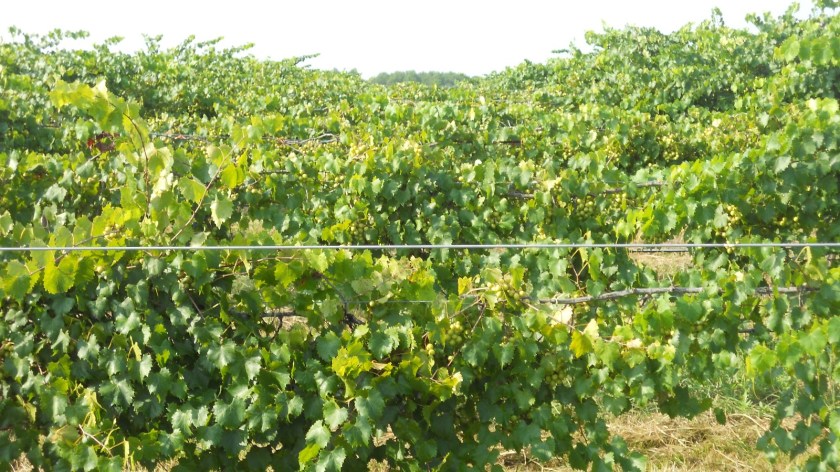
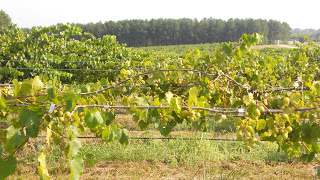
The following pictures were taken at Breckenridge Farms in Quitman, Mississippi.   You can see a noticeable difference in the development of the vines.  Where SumaGrow was used the vines of adjoining plants are full and meeting in the middle on the trellis.  The untreated vines lack fullness and are not even close to meeting in the middle.

Muscadine Grapes without SG Quitman MS Muscadine Grapes with SG Quitman MS

Last summer the treated vines produced over 4 tons per acre and untreated was only close to one ton per acre!

These grapes are juiced at a winery in North Carolina.  In the southeast U.S.,  they are mainly eaten fresh and used to make jelly and home-made wine.

The effect of SumaGrow on young varieties of muscadines has been proven to be significantly noticeable.  After using once on half of a selected field of young plants we had a increase in growth of up to 50% per plant.  SumaGrow has become part of our program to grow young plants faster. It not only enhances growth but also seems to improve the overall health of the plants.”
Elliott Phillips

This vineyard was written up in the news:  Breckenridge Vineyard News Article

Here is a link to one page summary:  Muscadines_Breckenridge_Mississippi_Testimonial

South Africa Organic Citrus Grower Improves Tree Survival Rate

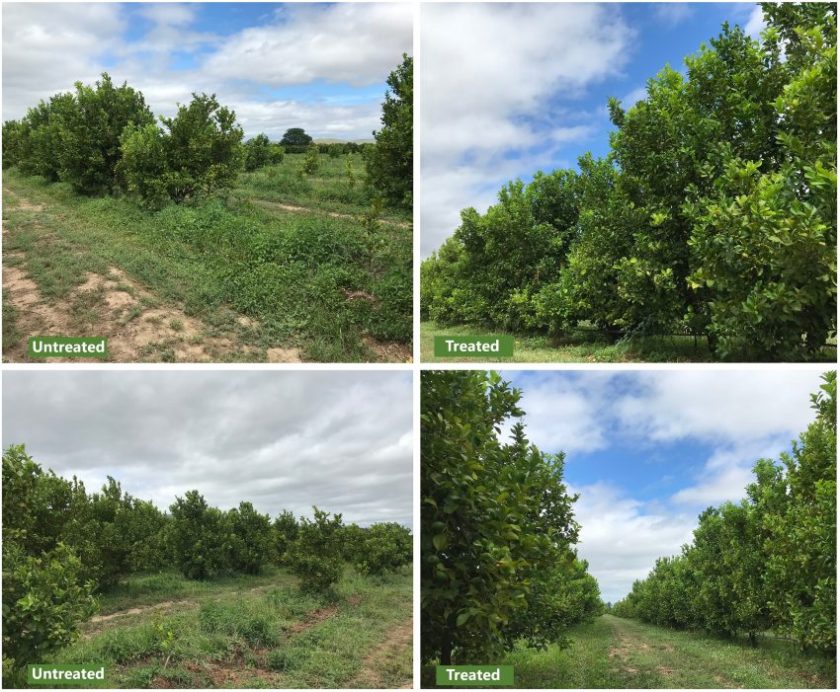
A South African organic citrus farmer improved his tree survival rate to almost 100% (up from 50%) after applying ExploGrow (SumaGrow), three years after replanting new organic citrus trees into “very old citrus soil”.

Due to organic growing restrictions on the use of chemical poisons/fertilizers, this farmer’s previous optimal survival rate was around 50%.  The citrus trees from the block treated with ExploGrow™ (SumaGrow) are also carrying many more lemons versus the control.

Organic-Citrus-Trees-South Africa Lemon

Photos above: 3 years after replanting Citrus trees, taken 10 days apart with slightly different lighting. Along with the improved survival rate, there is also a remarkable difference visible with naked eye. The farmer (based in the Sunday’s River Valley) invited us to bring any serious Citrus farmer to “come and see for themselves”.

South Africa Lemon tree comparison

The [ExploGrow (SumaGrow) treated] trees are growing aggressively, much faster than the control.” 🙂

Full Organic Citrus Farmer​

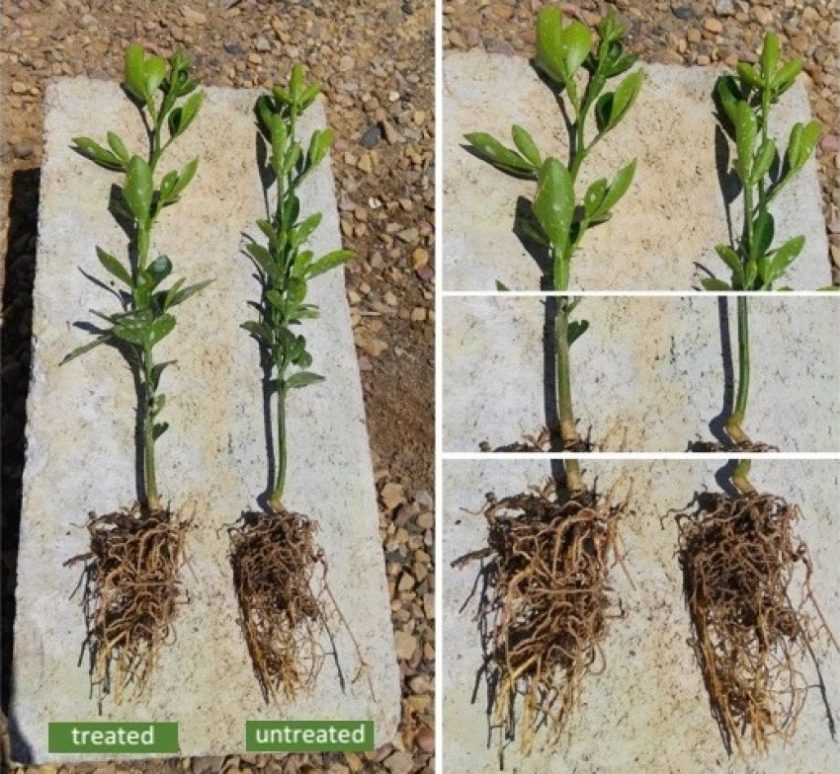
Below are pictures of seven month old orange tree seedlings treated with ExploGrow™  (SumaGrow).  The photos were taken nine weeks after the first application of ExploGrow™ (SumaGrow).

South Africa 7 week old orange seedlings

Stem diameter +22%ExploGrow™ (SumaGrow) treated 4.5mm, Untreated 3.7mm (9 weeks after the 1st application)

Increased root mass: over 100%  ExploGrow™ (SumaGrow) treated > 2,000mg; Untreated < 0,999mg

Improved growth rate: 19% Matured for replanting: ExploGrow™ (SumaGrow) treated: 19/100; Untreated: 16/100

South Africa Lucerne (Alfalfa) Achieves 130% Yield Increase

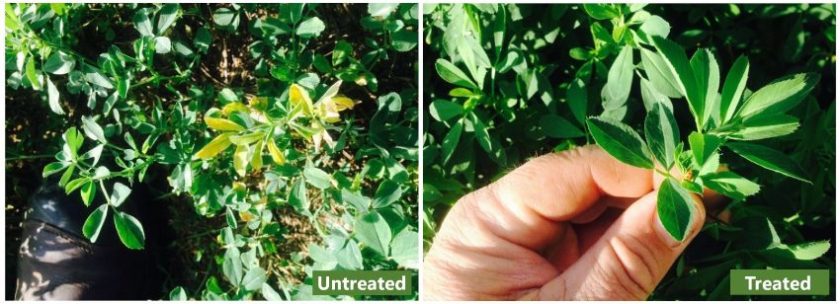
Lusern-Alfalfa-South Africa -- field comparison160126

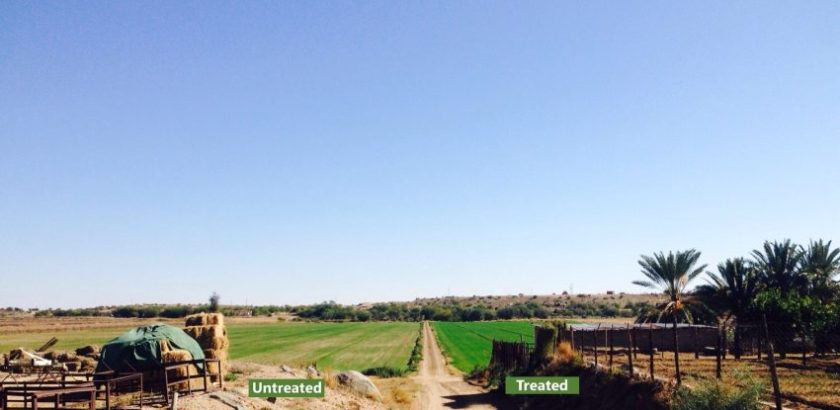
Mr. Francois van Rooyen, a lucerne and pecan nut agriculturist, carried out the following interesting controlled test on his lucerne.

  • The right-hand field was treated with ExploGrow™ (SumaGrow).
  • The left-hand field was not treated.
  • The soil is the same in both fields: very brackish and shallow water table, and is well drained with underground pipes.
  • In all other respects the two fields were treated the same, except a variation in the type of Lucerne.
    On the left hand field: Sardi 10 cultivar. On the right hand field WL 711.
  • Both fields were therefore top producers with low dormancy and both fields were also treated identically with organic acids, clay minerals, macro-elements, micro-elements and activated carbon, to provide an effective and balanced soil due to brackish conditions prevailing in the area.

ExploGrow™ (SumaGrow) has just raised the maximum yield ceiling for my land and a 130% increase in yield represents a massive increase in profits.”

Mr Francois van Rooyen, Lucerne and Pecan Nut agriculturist

UPDATE: Results after harvesting Lucerne

  • Harvesting took place during March/April 2016
  • Yield increase: 130%
  • The ExploGrow™ (SumaGrow) treated area produced 23 tons per hectare versus 10 tons per hectare from the untreated area.
  • Better plant health on the ExploGrow™ (SumaGrow) treated area showing a “remarkable difference compared to the untreated area”.
  • After a severe and damaging drought, I would attribute the radically superior yields on the treated land to the bigger root systems, reduction in watering requirements and improved plant health, delivering over 23 tons per hectare compared with only 10 tons per hectare for untreated area.” Mr. van Rooyen

Lucerne-Alfalfa -- South Africa close up

Based on his expertise in balancing soil, Mr van Rooyen offers his analysis as follows:

I believe that the carbon and organic acids act as excellent food for the ExploGrow™ (SumaGrow) microbes.

In nature, manure (for example) releases organic acids and then feeds organisms from the animal’s intestines that generates diverse populations of ground microbes. Without the dung, the microbial populations would not develop, because some form of energy needs to drive the microbial activity. It is not enough to only use a balanced vitamin and mineral supplement. You also need protein, carbohydrates and other energy-rich compounds to function at the optimal level.

I therefore believe that the organic acids in my fields provide the energy to the microbes to develop a diverse strong population. This diverse population can now execute various tasks like (a) extracting minerals from the soil solution and (b) helping the plant to absorb the minerals. 

Microbial activity fuels a high rate of multiplication. This impacts positively on the plants also acting as a precursor to the plant’s own productions of hormones, resulting in stronger growth, like I observed with ExploGrow™ (SumaGrow).

The ExploGrow™ (SumaGrow) microbes develop a diverse population in symbiosis with the plant. This diverse group of microbes carry out several critical functions such as binding of atmospheric nitrogen, releasing phosphates etc. In this specific case of brackish soil, the microbes make the excess iron available to the plant for consumption, which would otherwise be detrimental to root establishment and growth.

I believe this is clear from the photo, when looking at the left-hand field. One can clearly see in the photo that on the untreated left field the plant microbial interaction is poor, although this field has an otherwise absolutely balanced fertilization program.

The soil in the left field is simply poor in essential microbes.

Looking at the right-hand field treated with ExploGrow™ (SumaGrow), the picture speaks for itself!

On my farm I noticed an extraordinary difference in the presence of lice (“Bladspringers”). The ExploGrow™ (SumaGrow) treated areas were virtually unaffected compared with the untreated areas that were severely affected. Furthermore, three other farmers that I supplied with ExploGrow™ (SumaGrow) experienced similar results.

Mr Francois van Rooyen, Lucerne and Pecan Nut agriculturistLucerne - Alfalfa -- South Africa -- bush view

Photo: Note how many leaves there are on the treated plants compared to the low leaf count on the untreated plant

At the end of the season Mr van Rooyen shared the following observations:

  • A very intense drought hit the central and western regions in South Africa. 
  • Insects such as Bladspringer (Leafhopper) that normally survive in the field, fed on Lucerne for the whole summer, causing severe damage.
  • The ExploGrow™ (SumaGrow) treated area had a very positive effect on the resistance of the plants against insects.
  • Where farmers applied ExploGrow (SumaGrow) in the spring, there was visible resistance. The population of the insects were much smaller on the ExploGrow (SumaGrow) treated areas. Also, there were far less marks on the leaves in the ExploGrow (SumaGrow) treated areas.
  • Within six days of the end of March we had 150 mm of rain. 
  • The treated Lucerne survived much better in the wet conditions than the untreated Lucerne.
  • In the end, production varied from 10 tons for the untreated Lucerne and 23 tons for the treated Lucerne.”
 “ExploGrow™ (SumaGrow) is a winner!
Mr Francois van Rooyen, Lucerne and Pecan Nut agriculturist

Pecan Nuts

“I made the same observation on Pecan Nut trees, in an orchard where 40% of the trees were dying – although the soil was perfectly balanced with organic acids elements etc.  After treatment with ExploGrow™ (SumaGrow) there was a total recovery.”

Mr Francois van Rooyen, Lucerne and Pecan Nut agriculturist


South Africa Onion Trial Achieves a Return on Investment of 3959%

Return on investment: for every R1.00 invested in ExploGrow™ (SumaGrow), the farmer received a return of R39,59 (3,959%)

  • Hectares planted: 6
  • ExploGrow™ (SumaGrow) applied: 48 liters
  • Normal yield: 55 tons per hectare (5 year average)
  • ExploGrow™ (SumaGrow) yield: 104.2 tons per hectare
  • Additional tons per hectare: 49.8
  • Additional income per ton: R3,000.00
  • Additional tons harvested: 298.8 tons
  • Additional income over 6 hectares: R896,400.00
  • Return on investment: 3,959%

The estimated investment gain (return) is based on the farmer harvesting an extra 298.8 tons of onions by the use of ExploGrow™ (SumaGrow).  This translates in to an estimated financial gain of R 896,400.00 (US$ 68,953.84) = the sales value of the extra 298.8 tons of onions.

Interview with the farmer explaining his record onion harvest:

(The text below has been transcribed from the above video interview (in Afrikaans) with the farmer.)

“We used ExploGrow™ on our December* planting of onions.

*[extreme hot weather]

We applied 8 liters [2,11 US gal] per hectare [2,47 acres] of ExploGrow™ (SumaGrow).

We normally harvest an average of 55 tons per hectare on our December planting. Having just finished harvesting, the land [on the first preliminary calculation] yielded 95.6 tons** per hectare.

** [The final tonnage, however, added up to 104.2 tons per hectare. This was an +89.45% increase = +49.2 tons per hectare. This final tonnage was actually 8.6 tons more per hectare than the preliminary calculation mentioned in the video interview.]

The only change made to our normal onion program was that we added ExploGrow™ (SumaGrow), together with the recommended food products*** for ExploGrow™ (SumaGrow) microbes.

We applied the 8 liters / ha of ExploGrow™ (SumaGrow) twice at 4 liters per application [4 liters x 2], followed by 10 liters / ha of the recommended food products*** for the ExploGrow™ (SumaGrow) microbes.

We are very excited about the road ahead.
We immediately applied ExploGrow™ (SumaGrow) to all our potato crops! [Estimated around 100 hectares]
Now we are also very excited to see what ExploGrow™ (SumaGrow) will achieve with our potatoes.

Thank you very much, Rian.” 🙂

***[The ExploGrow™ (SumaGrow) food products” (co-applied to the soil) consist of low cost organic matter, carbon etc., generally recommended to assist some functions of the microbial species contained in the ExploGrow™ (SumaGrow) poly-microbial blend. These food products are recommended (although, not essential) when a soil analysis shows levels of high nitrate; low carbon and low organic matter.]


South Africa Potato Trial Increases Yield 79% and Brix Levels by 57%

In South Africa, and some nearby African countries, SumaGrow is marketed under the ExploGrow name.  Here is a video of a potato trial, which increased the yield by 79% and the brix (natural sugars and nutrients) levels by 57%!

Texas Winter Wheat Trial Increased Net Profit 44.9%

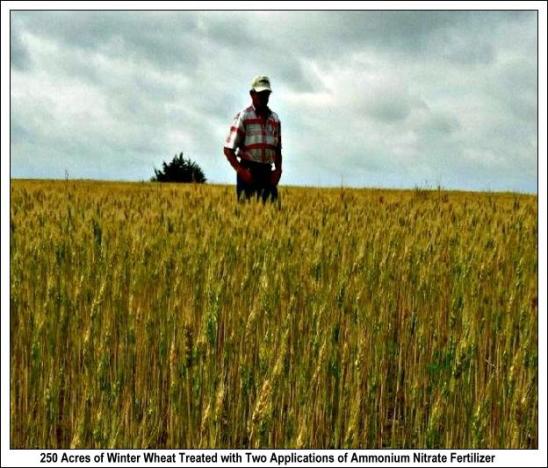
This comparison test was conducted on 500 acres of Fannin Ranch, north of Dallas, Texas.  The field was divided in two, 250 acre sections, and planted with Red Winter
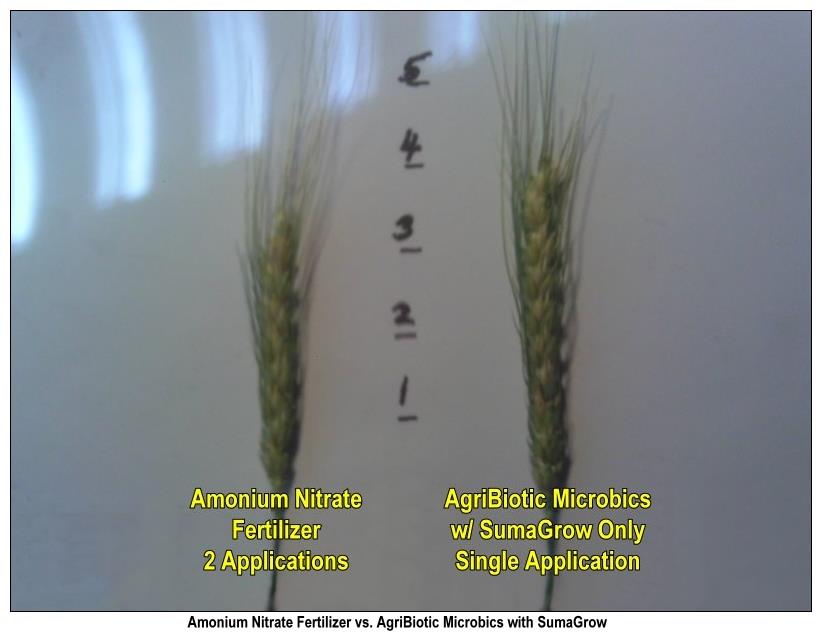
Wheat.  On one section, AgriBiotic Microbics with SumaGrow was applied shortly after planting in a single application.  The other section was treated with two applications of Ammonium Nitrate fertilizer.  The photos below were taken just before harvest in May.

Texas Winter Wheat treated with fertilizer

Texas Winter Wheat Treated with Brix Agribiotics

There is an obvious visual difference in the height and density of the two wheat fields. The grower reports that wheat heads on the SumaGrow wheat were significantly larger and yielded 36-40 seeds per head, compared to 30-34 seeds per head in the fertilized wheat.  Texas Wheat Trial Agribiotics Wheat Tillers

The results were overwhelmingly in favor of the AgriBiotic Microbic Products w/ SumaGrow.  Not only were input costs lower in treating the soil, but that section outperformed the other section by netting an average of 14 additional bushels per acre for a net profit increase of 44.9% per acre.

Click here for a two page summary with pictures:  Texas Wheat Trial — Brix Agribiotics

Mississippi State University Study Validates SumaGrow Benefits, 16% Yield Increase in Irish Potatoes

Irish potatoes are of great economic and dietary value as a food-source worldwide ranking as the third most important food crop after rice and wheat.  Potatoes require high levels of fertilizer to produce high yields with marketable quality. However, in some countries fertilizer is very difficult to obtain and very expensive. Using SumaGrow would greatly reduce this need for, and cost of, fertilizers.  With SumaGrow, it has been shown that equivalent yields and growth can be obtained at reduced fertilizer rates when compared to full recommended fertilizer treatments.

In almost all trials, SumaGrow actually increases the yield compared to the existing grower standard — what the farmer is obtaining now using the best available technologies without SumaGrow.  In this particular trial, growing Red LaSoda Irish potatoes, “combined yields from the grading process at ten days following harvest showed the same results where the SumaGrow treatments were as much as 2,509 Lbs/acre greater than the 100% fertilizer treatment without SumaGrow.”  This equates to a 16% yield increase.

Additionally, “at harvest criteria did show the strengths of the SumaGrow product in reducing fertilizer rates, hence reducing input costs and minimizing environmental hardships.”  Better plant health and vigor, as well as higher brix levels were also noted.

Here is the link to a copy of the study report: Mississippi State U — Irish Potato

China Cotton Study at Jiangxi Agricultural University Shows 28.3% Yield Increase

This university study doesn’t have many specifics, however, we do know the lint (what the farmer actually gets paid on) yield increase went up 28.3%.  Three gallons of SumaGrow were used per acre due to poor soil health.

The one page summary has some additional details: China_Cotton_Jiangxi_summary

Arkansas Cotton Farmer Obtains Additional 100 Pounds of Lint per Acre

These amazing results were sent in from Danny Quall’s farm in Jonesboro, Arkansas. Danny grows 1500 acres of cotton in addition to other crops that he treats with a conventional fertilizer program.  Danny chose two 10 acre conventionally fertilized plots of cotton, one of which he treated with a product containing SumaGrow. The 10 acres treated with a product containing SumaGrow:
  • Produced 100 lbs/acre more in lint cotton
  • Produced $10/acre more in cotton seed
  • Matured 10 days earlier
  • Tap root was an average of 6” longer
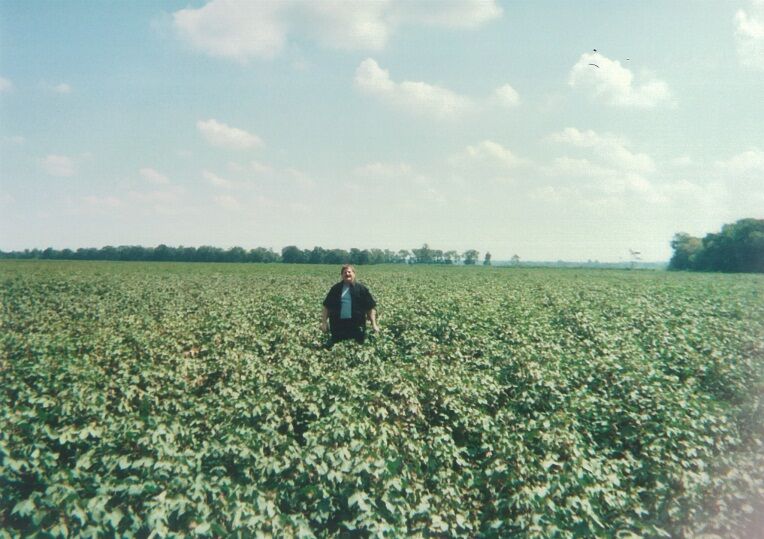
After the cotton reach maturity, it was exposed to a wind storm that produced winds in excess of 50 mph. The plot treated with SumaGrow stood tall and was undamaged.  The untreated cotton was pushed to the ground, inflicting damage to the stalk and cotton bolls.
No SumaGrow, treated with 10-10-10 fertilizer
Qualls Farm without 2
Qualls Farm without
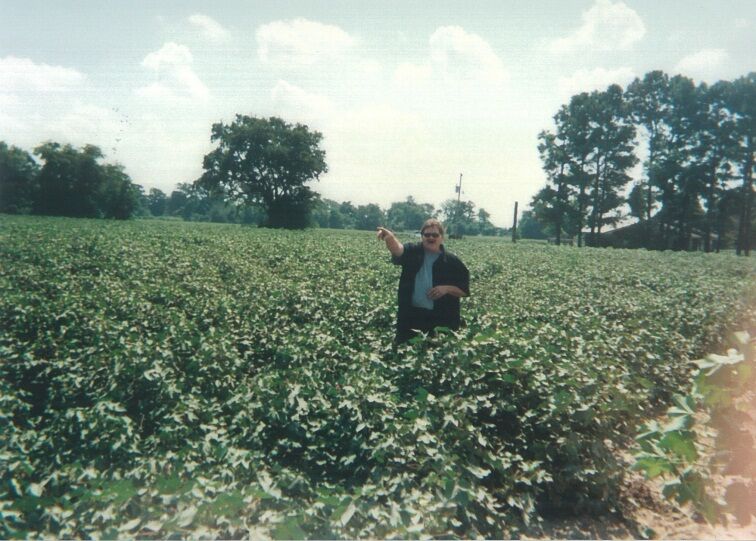
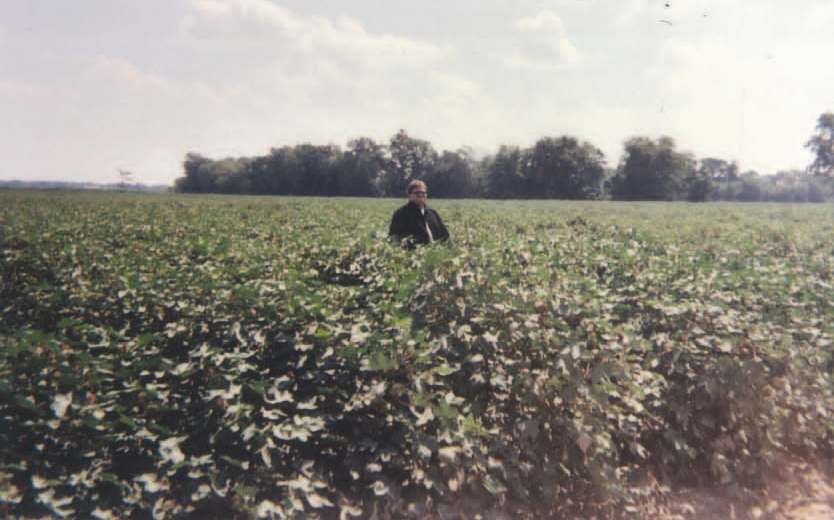
No SumaGrow Treatment — Notice the height of the cotton is below the waist.
Cotton treated with SumaGrow Cotton is well above the waist:
Qualls Farm With SG
Qualls Farm With SG 2